
Month: July 2024

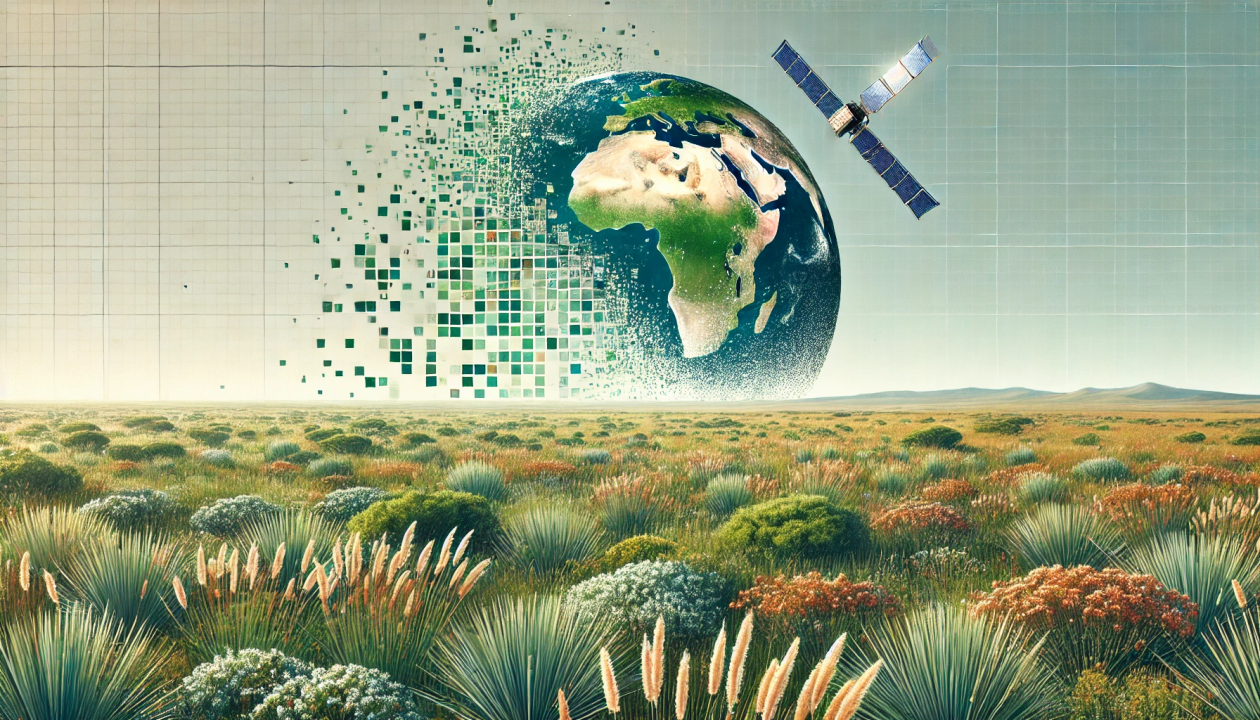
  • Pixels and Plants: Harnessing Satellite Technology and AI to Monitor Grassland Biodiversity in South Africa

    Pixels and Plants: Harnessing Satellite Technology and AI to Monitor Grassland Biodiversity in South Africa

    Biodiversity, the variety of life on Earth, is essential for maintaining ecosystem health and the services they provide to humanity. Grasslands, in particular, are home to a rich array of plant species that contribute significantly to local and global ecosystems. However, these vital landscapes are under threat, and conservation efforts require robust, cost-effective tools to monitor and protect them. This is where satellite remote sensing comes into play.

    What is Remote Sensing?

    Remote sensing involves gathering information about the Earth’s surface using sensors that are not in physical contact with the area being observed. Satellites, drones, and aerial photos can collect data on vegetation, land cover, and other environmental features. By analysing this data, researchers can infer information about the distribution, abundance, and diversity of plant and animal species. This approach saves time and resources while allowing for the coverage of large, often inaccessible areas.

    Using Satellite Data to Map Species Richness in Sub-alpine Grasslands

    A recent study conducted in South Africa’s Golden Gate Highlands National Park, and published in the journal Applied Vegetation Science, showcases the effectiveness of remote sensing in biodiversity monitoring. The study used data from two satellite systems: Landsat 8 and Sentinel-2, which capture detailed images of the Earth’s surface. Landsat 8 and Sentinel-2 are Earth observation satellites that provide valuable complementary data for environmental monitoring and research efforts.

    First, the researchers collected field data on plant species composition and coverage from 142 plots across the park. They calculated species richness (the number of different species in an area) and the Shannon-Wiener species diversity index (a measure that considers both the number of species and how evenly they are distributed). Next, this traditional data was then correlated with remote sensing data from the satellite images, which included light wavelengths not visible to the naked eye, particularly the near-infrared (NIR) band. This NIR band, along with specific vegetation indices such as the Enhanced Vegetation Index (EVI) and Soil-Adjusted Vegetation Index (SAVI), were important in predicting plant diversity.

    The Power of Machine Learning

    However, more than raw satellite data is required. The researchers employed a sophisticated machine learning technique called Random Forest to make sense of this vast amount of information. Think of Random Forest as a super-smart computer program that can identify patterns and make predictions based on complex data sets. This approach allowed the team to predict species richness (the number of different species in an area) and diversity (a measure that considers both the number of species and how evenly they are distributed) with impressive accuracy.

    Key Findings and Why This Matters

    The study delivered intriguing results that I will summarise in the following four points.

    High Prediction Accuracy: The study achieved prediction accuracies of up to 91% for species richness and diversity. This means that the satellite-based method was able to estimate biodiversity levels almost as well as traditional ground surveys.

    The Importance of Near-Infrared: The research highlighted that the near-infrared (NIR) part of the light spectrum was particularly useful for predicting plant diversity. This makes sense, as healthy vegetation strongly reflects NIR light.

    Vegetation Indices Matter: The study found that certain vegetation indices, notably the Enhanced Vegetation Index (EVI) and Soil-Adjusted Vegetation Index (SAVI), were valuable for predicting biodiversity. These indices are special calculations that help highlight vegetation characteristics in satellite images.

    Seasonal Considerations: The effectiveness of the method varied slightly depending on the time of year, with predictions being most accurate during certain months. This underscores the importance of considering seasonal changes in vegetation when using this approach.

    The Future of Remote Sensing in Biodiversity Conservation

    The results show that using remote sensing to monitor biodiversity is both cost-effective and efficient. Even sensors with moderate resolution can provide valuable insights into biodiversity patterns. This means that high-resolution sensors might not be necessary, making it easier and more affordable to use remote sensing for biodiversity monitoring and conservation planning, especially in areas with limited resources.

    This research is a big step forward in our ability to monitor and protect biodiversity. The results of this study are promising; however, the authors acknowledge there are some limitations. The method might not work as well in areas with very dense tree cover or where many species look very similar. It is also important to confirm satellite predictions with actual observations on the ground to ensure accuracy. Future research directions could include developing more sophisticated algorithms to differentiate between similar species, integrating data from multiple satellite sources for enhanced prediction accuracy, and creating user-friendly tools to democratise this technology for conservation planning.

    Overall, using satellite remote sensing and machine learning for biodiversity monitoring is a powerful new tool for conservation. It gives us unprecedented insights into ecosystem health and diversity, helping us understand the natural world better and make informed decisions to protect it. As this technology develops, it can be used in many ways, from tracking ecosystem recovery after disasters to monitoring reforestation projects and even in agroforestry. This research shows that innovation and technology are essential in tackling global environmental challenges, connecting satellite observations with on-the-ground conservation efforts, and opening new possibilities for understanding and protecting our planet’s biodiversity.


  • AI Ears: Monitoring Bird Biodiversity with Machine Learning in South African Wetlands

    AI Ears: Monitoring Bird Biodiversity with Machine Learning in South African Wetlands

    Biodiversity monitoring is crucial for conservation efforts, especially in ecologically rich regions like South Africa. Traditional methods, while effective, often come with prohibitive costs and logistical challenges, especially in the diverse and dense habitats of wetlands. Recent research provides an interesting tech-powered solution. The project- called EcoSonicML– leverages the power of machine learning and sound-based sensor systems to monitor bird populations in these critical ecosystems. This innovative approach not only promises cost-effectiveness but also aims to provide comprehensive data on bird populations, feeding into initiatives to preserve these vital ecosystems.

    Understanding the Challenge and the Power of Passive Acoustic Monitoring (PAM) in Biodiversity Monitoring

    Wetlands are biodiversity hotspots, playing a critical role in the breeding and feeding of various bird species. South Africa, with its rich array of migratory birds, presents a unique challenge for researchers and conservationists. The complexity of identifying and tracking these species, particularly in environments where multiple species coexist, necessitates innovative solutions. EcoSonicML addresses these challenges by employing Passive Acoustic Monitoring (PAM). This method utilises autonomous sound recording units to observe wildlife in their natural habitats without human interference.

    The Nuts and Bolts of Building a Cost-Effective Sensor System

    (You’re welcome tech-heads!)

    At the heart of EcoSonicML is a carefully designed hardware setup optimised for deployment in challenging wetland environments. The system’s core components include:

    • Raspberry Pi Zero 2 W: Selected for its cost-effectiveness, processing power, and power efficiency, this single-board computer serves as the brain of the sensor system.
    • USB Sound Card: A UGreen USB sound card enhances audio recording capabilities, offering superior audio quality and the flexibility to connect external microphones.
    • Microphones: The Volkano Clip Pro Series Microphone was chosen for its signal-to-noise ratio and extra-long cable, which are crucial for capturing high-quality audio in wetland settings.
    • Storage: A 32 GB SanDisk microSD card provides ample storage for recorded data and system software.

    Machine Learning at the Core of EcoSonicML

    At the forefront of EcoSonicML’s capabilities is the BirdNET algorithm, a deep learning-based solution developed by the Cornell Lab of Ornithology. BirdNET-Analyzer, the most advanced version of this algorithm, was chosen for its extensive coverage of over 6,000 bird species and its active maintenance, which is crucial for accurate species identification. Two variants of BirdNET were tested in the field:

    BirdNET-Analyzer: This advanced version covers over 6,000 bird species and includes the ability to filter out-of-range detections based on eBird data, enhancing accuracy for local species

    BirdNET-Lite: A more lightweight version, tested alongside BirdNET-Analyzer for comparison.

    The machine learning model works with audio data by first turning it into spectrograms—visual representations of sound. Then, it preprocesses the data, extracts features using unique layers called residual stacks, and finally classifies the species.

    Field Experiments: Putting Theory into Practice

    Field experiments were conducted at the Rondevlei Nature Reserve and Intaka Island in Cape Town, South Africa, to assess the system’s performance and reliability. These tests aimed to evaluate detection accuracy, robustness under varying environmental conditions, and comparison with human observations.

    • Sensor Detection Accuracy and Robustness

    The researchers observed that the BirdNET-Analyzer consistently demonstrated higher accuracy in species identification compared to BirdNET-Lite. It avoided out-of-range detections and aligned more closely with human observations. Further experiments under windy and clear conditions showed the system’s environmental robustness, with BirdNET-Analyzer maintaining high accuracy levels.

    • The Quiet Calls: Room for Improvement

    While the system excelled at detecting many species, it showed limitations in capturing quieter calls or contact chirps compared to an experienced human observer. Species like the Lesser Swamp Warbler were frequently detected by human observers but less so by the sensors. This highlights areas for future improvement, particularly in microphone sensitivity, to enhance the detection of these more elusive vocalisations.

    Efficient Data Management: The Backbone of Monitoring

    The system’s ability to efficiently transfer and store data is critical for its success. There was effective remote data transfer via Secure Shell (SSH) protocol. SSH is a cryptographic network protocol that securely moves files between computers over the internet. It protects the data so no one else can read it. It also checks that the data has not been changed during transfer and makes sure only authorised users can access it. Additionally, physical retrieval methods proved successful, with the microSD card managing data seamlessly and purging old data when necessary.

    A Modular and Cost-Effective Design

    One of EcoSonicML’s standout features is its modular design. The ease of disassembly, reassembly, and replacement of individual components enhances maintenance and longevity. Undoubtedly, one of EcoSonicML’s most significant advantages is its cost-effectiveness. A prototype sensor costing R826.90 (£35/ $45) offers a substantially more affordable alternative to commercial options like the Song Meter SM4, which costs approximately R16,912.17 (£716/ $925).

    Future Directions: Enhancing Environmental Monitoring

    Looking ahead, the project team is exploring the integration of climate sensors, which could provide a more comprehensive environmental monitoring solution. This holistic approach would not only document bird species but also offer insights into bird behaviour in relation to changing environmental conditions.

    A Tool for Conservation

    EcoSonicML represents a significant stride forward in the field of wetland conservation and ecological research. By combining cutting-edge machine learning algorithms with cost-effective hardware, the project offers a promising solution for large-scale, long-term biodiversity monitoring in South African wetlands and beyond. As the system continues to evolve, it promises to provide a valuable resource for researchers and conservationists alike, ensuring that the vital data needed to guide conservation and management decisions is both accessible and reliable.

  • Mining for Answers: eDNA Revolutionizes Detection of an Invasive Leafminer Pest

    Mining for Answers: eDNA Revolutionizes Detection of an Invasive Leafminer Pest

    Invasive species pose a growing threat to agriculture, biodiversity, and natural ecosystems in our interconnected world. Invasive pests are organisms, typically insects or other small animals, that are introduced to an area where they are not native. They disrupt agricultural production and deplete resources. This occurs through competition, predation, and other negative impacts. The agromyzid leafminer fly, Liriomyza sativae, is one such global concern. It affects vegetable and nursery industries worldwide. Traditional detection and management methods for these leafminers face challenges due to the insects’ small size, rapid lifecycles, and visual similarities to other species. A groundbreaking approach by Australia-based researchers uses environmental DNA (eDNA). This method offers a powerful tool to enhance pest surveillance and control. It significantly improves both sensitivity and efficiency.

    Understanding Environmental DNA: Environmental DNA refers to the genetic material organisms leave behind in their surroundings, such as soil, water, or even on the surfaces they interact with. This can include skin cells, saliva, faeces, or mucous. In the context of pest management, eDNA allows scientists to detect the presence of specific species by analysing samples from the environment. Leafminer flies create distinctive tunnels, or “mines,” inside plant leaves as their larvae feed. Even after the larva has left the mine, traces of its DNA remain. The team developed a novel eDNA-based diagnostic method that can detect traces of the fly’s DNA left behind in empty leaf mines long after the insect has moved on.

    Developing the eDNA Test

    The researchers designed a highly specific molecular test to amplify and detect trace amounts of DNA unique to leafminer, distinguishing it from other similar species. The eDNA approach involved collecting samples from mine-infested leaves, preserving them in either 100% ethanol or on Whatman FTA cards, and then conducting molecular analysis using species-specific real-time assays. This test, based on quantitative PCR (qPCR) technology, can identify incredibly small amounts of target DNA – as little as 0.1 picograms (that’s 0.0000000000001 grams!). To evaluate the effectiveness of this new method, the team conducted several experiments:

    1. They tested how long DNA could be detected in leaf mines after the insect had left.

    2. They assessed the reliability of the test under field conditions.

    3. They explored how different factors, such as preservation methods and the presence of insect remains, affected detection success.

    Fantastic Findings

    Long-lasting DNA Signal: One of the most exciting discoveries was that leafminer DNA could still be detected in leaf mines up to 28 days after the insect had left. This dramatically extends the window for pest detection compared to traditional methods that rely on catching the insect in the act.

    Reliable Field Performance: The eDNA test proved highly effective under real-world conditions. When leaf mines were preserved in ethanol, over 73% yielded a confirmed presence of leafminer. Even with a less optimal preservation method (FTA cards), nearly 40% of samples still provided positive results.

    Factors Affecting Detection: The presence of insect remains in the leaf mine significantly increased the amount of DNA that could be detected. However, interestingly, the age of the leaf mine and its size did not significantly affect detection success. This suggests that even old damage can provide valuable diagnostic information.

    The researchers demonstrated the real-world utility of their eDNA test in several ways. The test revealed that leafminers were infesting previously unknown host plants in Australia, including common weeds and garden crops. It also confirmed the presence of leafminers on an island where they had not been previously recorded. This is valuable for monitoring pest geographical range expansion. Furthermore, the test could distinguish leafminer damage from that caused by other visually similar leaf-mining insects. This is crucial for implementing appropriate management strategies.

    The Challenge of Invasive Pests: eDNA and The Future of Biosecurity Surveillance

    Invasive species pose a significant threat to biodiversity, ecosystem services, and the profitability of agriculture. Combating these pests is costly. Early detection is crucial for successful management. Conventional surveillance methods, such as visual inspection and trapping, can be insufficient, especially in the early stages of an infestation when populations are small and difficult to spot.

    The success of the eDNA method in detecting and diagnosing leafminers suggests a broader application for other agriculturally significant pests. The new eDNA approach significantly extends the detection window. It allows identification long after the insect has moved on. This method increases sensitivity to detect low-level infestations. It also simplifies sampling by collecting leaf samples rather than capturing adult insects. The qPCR-based test provides rapid diagnosis compared to traditional identification methods. This enables quicker responses to potential invasions. Additionally, the technique’s scalability makes large-scale surveillance programs more feasible. As a result, overall biosecurity measures are enhanced.

    The authors acknowledge that the eDNA approach has some limitations. Future research needs to address these issues. First, understanding the environmental persistence of eDNA is crucial. This study provides new information on leafminer eDNA persistence on leaves. More research is needed on how environmental factors affect DNA degradation in leaf mines. Second, the current test only detects presence/absence. Refining it to provide information on infestation levels would be valuable. Third, developing tests that can detect multiple pest species from a single sample could increase efficiency. Finally, creating portable devices for on-site eDNA analysis would enable faster response times. Despite these challenges, the innovative use of eDNA marks a new era in biosecurity. It provides a critical edge in the ongoing battle against invasive species.

  • Getting it Right in Wildlife Monitoring: Optimising eDNA Techniques for African Savanna Waterholes

    Getting it Right in Wildlife Monitoring: Optimising eDNA Techniques for African Savanna Waterholes

    Embracing cutting-edge technologies will be essential in efforts to safeguard the planet’s natural heritage for future generations. Environmental DNA (eDNA) is transforming biodiversity monitoring, offering a non-invasive way to assess ecosystem health. The concept of eDNA is simple yet powerful: organisms shed DNA into their surroundings, and by collecting and analysing this genetic material, we can identify species present in an ecosystem without the need for direct observation.

    eDNA extraction from water samples has proven highly effective in aquatic ecosystems. While widely used in temperate regions, its application in tropical and subtropical areas, especially in Africa, remains limited. Adapting eDNA techniques to diverse environments like arid savannas poses unique challenges. However, a recent study conducted in Botswana’s Botsalano Game Reserve aims to change that by optimising eDNA sampling methods for savanna waterholes – critical hotspots for wildlife in arid regions.

    Why are Savanna Waterholes a Big Deal?

    Savannas, also known as grasslands, are a dominant feature of the African landscape. They span approximately 40% of the continent’s total area, covering over 13 million square kilometres (5 million square miles). These vast expanses of grass-dominated ecosystems stretch across much of central Africa, extending from the southern edges of the Sahara and Sahel regions down to the northern fringes of the continent’s southern tip.

    Waterholes in southern African savannas serve as vital gathering points for diverse wildlife, especially during dry seasons. These oases in arid landscapes offer researchers unique opportunities to monitor terrestrial mammal populations. However, the application of eDNA techniques in these environments presents several challenges:

    High turbidity: Savanna waterholes often contain high levels of suspended particles, making water filtration difficult.

    Warm temperatures: The heat can accelerate DNA degradation, potentially affecting sample quality.

    Limited infrastructure: Remote locations may lack access to electricity and refrigeration, complicating sample preservation.

    Study Insights: Optimising the eDNA Workflow

    The study focused on optimising the eDNA workflow, from sample collection to DNA extraction, to enhance the detection of terrestrial mammals that frequent these waterholes. The researchers systematically examined five critical variables in the eDNA sample processing workflow: eDNA concentration methods, Prefiltration techniques, Filter types,  DNA preservation methods and DNA extraction methods.

    This section may favour the heavy hitters, but  I will keep it as simple as possible. The study’s findings provide practical guidelines for researchers and conservationists working in similar remote and challenging environments.

    eDNA Concentration: Filtration vs. Centrifugation- While centrifugation allowed for processing larger water volumes, filtration proved more efficient in capturing high-quality DNA.

    Prefiltration (if applicable)- Prefiltration slightly increased the volume of water processed, but overall DNA yield did not vary significantly between prefiltered and non-prefiltered samples.

    Filter Type Matters: Glass fiber filters versus Sterivex filters – Glass fiber filters (0.7 µm pore size) outperformed Sterivex filters (0.45 µm pore size) in preserving DNA quality and yield. This suggests that coarser filters might be more effective in turbid environments, as they offer better water throughput and higher DNA recovery rates.

    Preservation Solutions: Longmire’s solution versus desiccant beads- Longmire’s solution proved superior to desiccant beads for preserving DNA at ambient temperatures. This was particularly important given the lack of refrigeration. However, the researchers suggest adding sodium azide to the solution to prevent microbial growth, especially for samples with high biological activity.

    Streamlined DNA Extraction: Commercial spin column kits vs Phenol-Chloroform isoamyl extraction- Commercial spin-column extraction kits, such as Qiagen’s DNeasy PowerSoil Kit, effectively removed inhibitors and provided consistent DNA quality and yield without purification steps.

    In downstream assessments, the researchers strongly recommended using multiple genetic markers to maximise species detection. In this study, the researchers used two genetic markers MiMammal and 12SV5, which detected 20 vertebrate species, including 11 mammals, across 26 samples. The 12SV5 marker identified more vertebrate species overall (13 species), while the MiMammal marker detected more mammal species (eight species). Notably. the overlap between the species detected by the two markers was minimal, with only two mammal species detected by both.

    Implications for Conservation and Management

    In many African countries, savannah landscapes are a national treasure. These landscapes host a wide array of wildlife, making them a major tourist attraction. The value of managing the savannah and its wildlife on the economy, for biodiversity and as a resource for future generations is incalculable. This study paves the way for more effective eDNA-based biodiversity monitoring in understudied ecosystems such as African savannas. Focused metabarcoding studies, applying these optimised methods, are crucial for a comprehensive understanding of terrestrial and aquatic biodiversity in these systems. Some potential applications include rapid biodiversity assessments, rare species detection, Invasive species monitoring and long-term ecosystem health tracking.

    How do we make this better?

    The optimisation of eDNA techniques for savanna waterholes represents an important milestone in African wildlife monitoring. Several challenges remain in fully realising the potential of eDNA monitoring in African savannas. Expanding genetic databases for African wildlife is crucial for accurate species identification. Further research is needed to reliably link eDNA concentrations to animal abundance or biomass. Understanding how eDNA signals persist and disperse in savanna waterholes will improve sampling strategies. Additionally, determining how eDNA data can best complement existing wildlife monitoring techniques is essential for widespread adoption. For conservationists, researchers, and policymakers working to protect Africa’s iconic wildlife, this innovative approach offers a powerful new tool in the fight against biodiversity loss.