

Month: October 2024

  • Revealing Plant-Insect Relationships Through Plant-Derived Environmental DNA

    Revealing Plant-Insect Relationships Through Plant-Derived Environmental DNA

    A Revolutionary Approach Enhances Our Understanding of Biodiversity and Arthropod Interactions

    Recent research into plant-derived environmental DNA (eDNA) has introduced a transformative method for exploring biodiversity, particularly the intricate interactions between plants and arthropods such as insects. As global concerns over the decline of arthropod populations intensify, traditional biodiversity monitoring techniques—like pitfall traps and Malaise traps—have revealed limitations. While reliable in collecting diverse community data, these methods often fall short in providing deep ecological insights. The innovative use of eDNA in a recent study promises to enhance the detection and understanding of plant-insect relationships, offering a more comprehensive picture of ecological dynamics.

    Understanding Environmental DNA (eDNA)

    Environmental DNA refers to genetic material obtained directly from environmental samples—such as soil, water, or, in this case, plant surfaces—without the need to capture the organisms themselves. Although not a new concept, applying eDNA to uncover plant-arthropod interactions is a novel development. Arthropods interact with plants in various ways: feeding on them, nesting within them, or simply residing on their surfaces. Through these interactions, they leave behind traces of their DNA on plant surfaces and within plant tissues. Traditional monitoring methods often miss these subtle interactions and overlook arthropods that spend much of their life cycle concealed within plant tissues.

    Study Sites and Plant Selection

    The research was conducted in two key locations in Germany: Kimmlingen and Trier. These areas were chosen for their rich plant diversity, providing an ideal setting for studying insect communities associated with different plants. In Kimmlingen, researchers focused on common grassland plant species. They collected parts such as stems, leaves, and flowers from plants like the rampion bellflower and bird’s-foot trefoil. In Trier, various types of grassland—including vineyards and pasturelands—were examined to assess how differing environments influence insect communities.

    Sampling Techniques and Experimental Approaches

    To study the insect communities, the researchers employed both environmental DNA collection and traditional sampling methods. The eDNA collection involved two primary techniques. First, they washed plant surfaces with water to collect DNA left by insects on the exterior of the plants. Second, they ground whole plant parts—such as leaves and stems—to detect DNA from insects residing inside the plant tissue. These methods enabled the team to detect insects that are often invisible because they spend most of their lives within the plants.

    Traditional methods included using traps like Malaise traps, which capture flying insects, and pitfall traps, which catch ground-dwelling arthropods. Sweeping nets were also used to collect insects present on the surface of the vegetation. These techniques are effective for capturing a broad range of insects but may miss those hidden within plants.

    Several experiments were designed to compare and evaluate these methods. In the first experiment, they compared traditional trapping methods to plant-derived eDNA by sampling multiple grassland plant species and using traps over a couple of weeks. The second experiment tested how well vegetation beating—physically knocking insects off plants onto a sheet—compared to eDNA in detecting plant-specific insects. The third experiment aimed to determine whether different parts of a plant, such as flowers or roots, housed different insect communities when analysed using eDNA. The fourth experiment examined the biodiversity from several grassland sites using both traditional sweeping and two types of eDNA methods to see how the results compared across different environments.

    After collection, the plant materials were carefully dried and ground into a fine powder. This powder underwent a DNA extraction process to retrieve the DNA left behind by insects. For the water samples obtained from washing plant surfaces, the DNA was filtered and then extracted. The extracted DNA was then processed using advanced sequencing methods to identify the different insect species present.

    The research team compared the diversity and composition of insect communities obtained from eDNA with those identified through traditional methods, providing insights into the effectiveness of each sampling technique.

    Enhanced Detection of Plant-Specific Arthropods with eDNA

    The study’s findings underscored the effectiveness of plant-derived eDNA in capturing a more detailed picture of the biodiversity associated with plants, especially when compared to traditional monitoring methods. One of the most compelling results was that eDNA proved particularly adept at detecting additional taxa often missed by conventional techniques.

    Specialised Herbivores and Fine-Scale Differentiation

    A key discovery was the superior performance of eDNA in identifying specialised herbivores—insects that feed on specific types of plants. The ability of eDNA to detect these specialised arthropods at a higher rate suggests that plants are hotspots of biodiversity and ecological interactions. Moreover, the study revealed fine-scale community differentiation within individual plants. This means eDNA can pinpoint insect communities residing on or inside different parts of the same plant, such as leaves, flowers, and stems. Such detailed insights are crucial for understanding the ecological roles of these insects and their impact on plant health and diversity.

    Diversity Estimates and Correlation with Traditional Methods

    While traditional methods like passive trapping have been the standard for arthropod monitoring, they often fail to provide a complete picture of the ecological web. The research showed that estimates of community diversity within sites (alpha diversity) and between sites (beta diversity) derived from eDNA were well correlated with those obtained from traditional methods. This correlation is significant as it validates the reliability of eDNA for biodiversity assessments and demonstrates its potential to complement or even enhance traditional methods.

    Streamlined Sampling and Broader Ecological Insights

    The use of eDNA has been shown to streamline the sampling process, offering a less invasive and more cost-effective approach to biodiversity monitoring. Incorporating eDNA into monitoring programmes could significantly enhance our understanding of ecological interactions, providing a more comprehensive view of the intricate relationships between plants and arthropods. This method allows for the detection of a wider range of species, including those that are elusive or reside within plant tissues.

    Conclusion

    The results of this research indicate that plant-derived environmental DNA is a powerful tool for uncovering the complex world of plant-arthropod interactions. By detecting a broader spectrum of arthropod species—particularly those with specialised relationships with their host plants—eDNA significantly advances our ability to monitor and manage biodiversity in a changing world. The study’s findings have profound implications for conservation efforts, providing a more nuanced understanding of ecological dynamics. This is essential for developing effective strategies to protect and preserve arthropod populations and the critical ecosystem services they provide.
  • eDNA Metabarcoding Matches Insect Interactions Captured in Flower Video Recordings

    eDNA Metabarcoding Matches Insect Interactions Captured in Flower Video Recordings

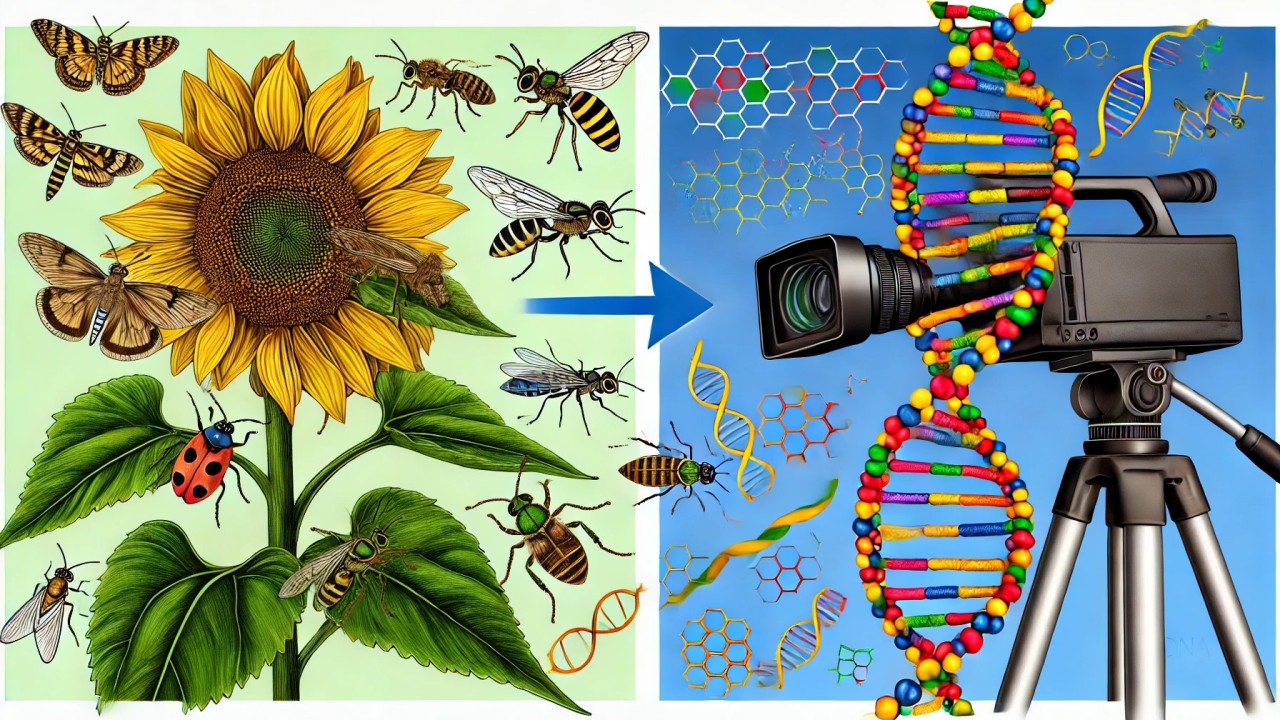
    Environmental DNA (eDNA) metabarcoding has emerged as a promising tool for detecting interactions between insects and plants. However, observation-based verification of eDNA-derived data is still required to confirm the reliability of those detections. A recent study aimed to address this by comparing eDNA metabarcoding with video camera observations to detect insect communities associated with sunflowers (Helianthus annuus). For those new to the terms ‘environmental DNA’ and ‘metabarcoding’- environmental DNA refers to genetic material obtained from environmental samples, such as soil, water, or, in this case, plant surfaces, without capturing the organisms themselves. Metabarcoding is the process of extracting and analysing this DNA to identify multiple species from a single sample rapidly.

    The researchers explored several hypotheses in their study. They aimed to verify the reliability of eDNA metabarcoding in accurately recovering insect interactions with plants, as observed through video recordings. Additionally, they tested the effectiveness of prewashing flower heads before eDNA sampling to determine if this method could effectively remove prior eDNA, ensuring that only new interactions were captured. Finally, they investigated potential biases in eDNA detection—specifically, whether eDNA metabarcoding tends to favour detecting certain types of interactions, such as those involving plant sap-sucking species, which could lead to the underrepresentation of other taxa like transient pollinators.

    How the Study Was Conducted

    The researchers studied insect interactions with sunflowers by combining field experiments, video recordings, and environmental DNA (eDNA) analysis. They chose a sunflower field because the large flower heads make it easy to observe insect activity. Five cameras recorded the interactions from 9 a.m. to 5 p.m. The sampling was conducted during dry and sunny weather, and there was no precipitation on the days of sampling.

    To focus on new insect visits, they prewashed 21 sunflower heads with deionised water using a handheld sprayer before filming. After recording, the researchers cut off the sunflower heads using clean stainless-steel scissors. They placed the flower heads in a plastic bag on dry ice while still in the field and then transferred them to a lab. To check for any contamination during sampling, they filled one plastic bag with 100 millilitres of deionised water from the sprayer used in the field. In the lab, they extracted DNA by rewashing the flower heads to collect any insect DNA left behind.

    Finally, they compared the data from the videos and the eDNA analysis using statistical methods to see if both methods provided similar results. This approach allowed them to validate their findings and understand the advantages and limitations of using eDNA metabarcoding compared to direct observation when studying how insects interact with plants.

    Discoveries and Insights

    Both methods revealed distinct arthropod communities, with approximately 25% overlap between the species detected. Notably, eDNA metabarcoding identified a broader range of arthropod families, particularly rare species that were not frequently observed in the videos. Conversely, video observations captured more frequent interactions. This suggests that eDNA might be more effective at detecting less common species that could be missed by visual observation. However, the eDNA method showed a bias towards detecting plant sap-sucking species, likely due to their longer contact periods with the plant, resulting in more significant eDNA deposition.

    Additionally, the study revealed that prewashing the sunflower heads did not completely remove existing eDNA traces, indicating that genetic material may persist longer than previously thought. This persistence needs to be considered when interpreting eDNA results.

    Implications for Future Research and Conservation

    These findings have significant implications for biodiversity monitoring and conservation. By uncovering the often-invisible connections between plants and insects, eDNA metabarcoding provides a deeper understanding of ecological networks. The study underscores the complementary strengths of eDNA metabarcoding and video observations in tracking insect-plant interactions. While each method offers distinct insights, their combined use gives a fuller picture of these relationships, allowing researchers to capture a broader range of species and interactions, which improves the accuracy of biodiversity assessments.

    Future research should focus on refining the integration of these methods by developing standardised protocols to enhance the detection of both rare and common species. Further investigation into eDNA persistence on plant surfaces and calibrating eDNA detection with video-observed interaction durations could improve result interpretation. Expanding this combined approach to other ecosystems, alongside using machine learning to automate video analysis, would enhance efficiency and accuracy. Ultimately, improving these techniques will lead to more robust biodiversity monitoring and a deeper understanding of plant-insect dynamics, strengthening conservation and agricultural efforts.

  • eDNA Analysis of Historical Herbarium Plant Specimens Reveals Plant-Insect Interactions

    eDNA Analysis of Historical Herbarium Plant Specimens Reveals Plant-Insect Interactions

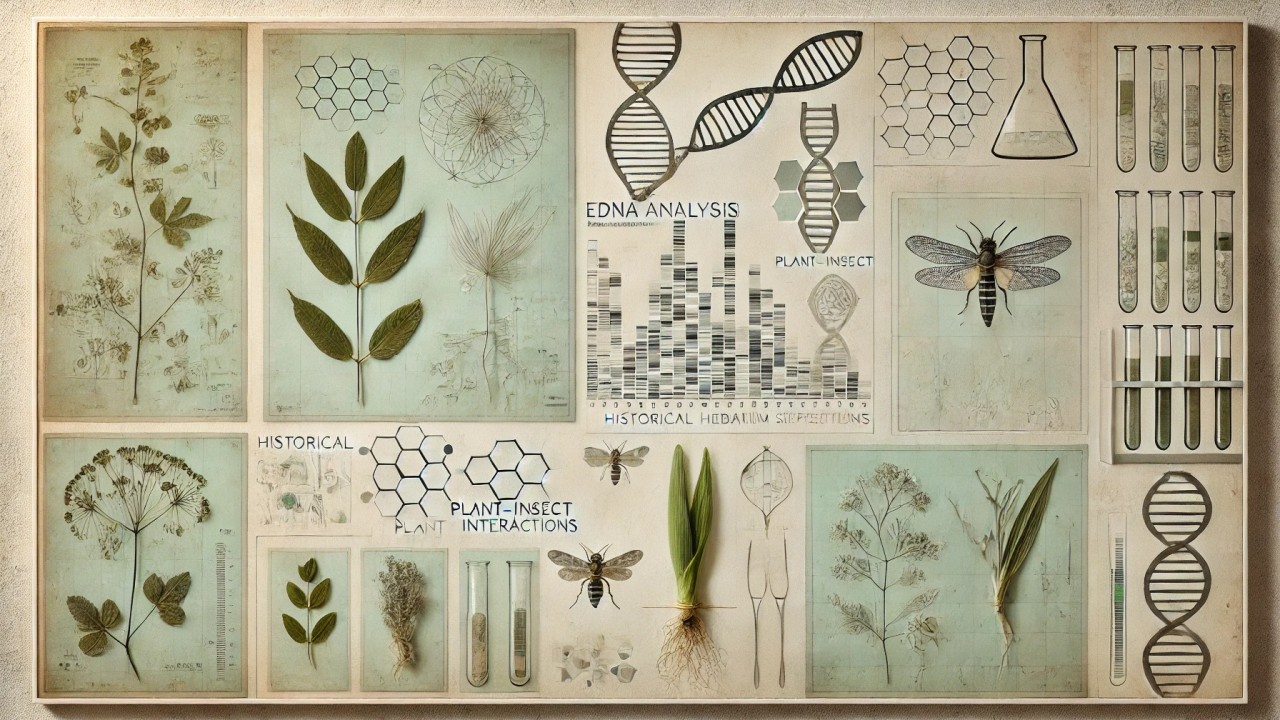
    Imagine walking into a room filled with carefully preserved plant specimens, some dating back centuries. These collections, known as herbaria, have long been treasure troves for botanists studying plant evolution and taxonomy. However, recent research has uncovered an unexpected bonus hidden within these dried leaves and flowers – a snapshot of the intricate world of plant-insect interactions frozen in time. A ground-breaking study has demonstrated that traces of insect DNA left behind on plants can be detected and analysed even decades after the specimens were collected. This discovery opens up exciting new possibilities for understanding how ecosystems have changed over time and how plants and insects have co-evolved.

    Herbarium Specimens: Time Capsules of Biodiversity

    Herbaria worldwide house millions of plant specimens collected and preserved over centuries. Stored under dry, dark conditions, herbarium specimens not only preserve plant DNA but also environmental DNA from insects that interacted with them— which can be extracted and analysed. Research shows that typical storage conditions do not significantly affect the arthropod diversity detectable in these samples, making herbaria crucial for studying the evolution of plant-insect interactions over time. The research team in this study examined herbarium specimens from three different sources:

    Iranian Herbarium (est. 2017): This herbarium, the most recent among the three, was housed at the University of Isfahan in Iran. It contained specimens of Calotropis procera (Giant milkweed/ Sodom apple), a widespread species in southern Iran. Researchers selected 19 specimens, each around six years old at the time of laboratory analysis, focusing on flowers and leaves to extract arthropod DNA. This institutional herbarium served as a standardised baseline for protocol development aimed at recovering arthropod eDNA from well-preserved plant specimens.

    German Herbarium (est. 2005): Compiled by one of the researchers as part of their university curriculum, this private Herbarium from Western Germany included various plant species representative of the region. Stored in a private household for 18 years, this collection helped explore a broader spectrum of plant-insect associations by sampling from ten plant species across six families.

    German Herbarium (est. 1963): Assembled by a pharmacy student during her studies, this collection from Northern Germany dated back 60 years. It also offered a variety of plant specimens from the region, allowing the analysis of plant-insect interactions from the mid-20th century. Despite the age of these specimens and prolonged storage in private settings, researchers successfully extracted arthropod DNA, highlighting the longevity of eDNA in herbaria specimens when properly preserved.

    Revealing Plant-Insect Relationships Through Environmental DNA (eDNA)

    The scientists used a technique called environmental DNA (eDNA) metabarcoding to analyse the genetic material left behind by insects on the plant specimens. This method allows researchers to identify multiple species from a single sample, providing a comprehensive picture of the insect community associated with each plant. Their findings were fascinating:

    Diverse insect communities: One of the most striking aspects of the findings was the broad spectrum of arthropod diversity recovered, including various types of herbivores, such as gallers, miners, chewers, and sap-suckers. Among these, sap-sucking arthropods were particularly well-represented, constituting approximately 39% of the total taxa identified. This abundance is likely due to their strong physical interaction with host plants, leaving ample DNA traces to be collected and analysed. Predators, parasitoids, and pollinators were also found among the recovered taxa, though pollinators were underrepresented. This was expected since their interaction with plants is typically brief, resulting in less DNA being deposited compared to herbivores that spend the majority of their lifecycle on the host plants.

    Ecological specificity: Ecological specificity refers to how distinct insect communities associate with particular plant species or different parts of a plant. The researchers found that distinct insect populations were associated with specific plant species, as evidenced by the different taxa found on various plant samples from the same Herbarium. There was minimal overlap among the communities, indicating a high degree of ecological specificity and minimal DNA transfer between samples. Moreover, even within a single plant, different compartments, such as flowers and leaves, were shown to have distinct interacting arthropod species. For example, in specimens of the Iranian plant Calotropis procera, flowers and leaves exhibited varied compositions of associated arthropod communities. While some taxa overlapped, many were uniquely found either on flowers or leaves indicating specialised interactions that occur at this level.

    Geographic accuracy: A significant finding was that the geographic origins of the arthropod DNA matched the regions where the plants were originally collected, underscoring the accuracy and reliability of this method for ecological studies. This indicates that the content of these specimens is reflective of actual historical interactions rather than contamination over the years.

    Specialised interactions: The researchers identified several arthropods exclusively associated with specific host plants. For instance, species like the gall midge Asphondylia sarothamni and the false flower beetle Anaspis rufilabris were found on particular European plants, while the Plain tiger butterfly Danaus chrysippus was associated with the Iranian plant Giant milkweed Calotropis procera. These discoveries highlight the specialised feeding and life cycle behaviours of these arthropods, which have evolved alongside their host plants. Moreover, the study revealed detailed multi-tiered ecological interactions, such as the tri-trophic relationship observed with the Willow-carrot aphid Cavariella aegopodii and its parasitoid, the braconid wasp Binodoxys brevicornis, feeding together on ground elder (Aegopodium podagraria). This level of specificity and interaction complexity is crucial for understanding the delicate balance within ecosystems and the potential impacts of environmental changes.

    Challenges and Innovations in Analysing Historical Specimens

    Working with historical specimens presented unique challenges that the researchers had to overcome. One significant challenge was dealing with the potential degradation of DNA over time, particularly in older specimens. DNA can degrade due to environmental factors and storage conditions, leading to reduced diversity and community representation in older samples. To address this, the researchers employed short DNA fragments to ensure more robust data recovery from older samples. Another challenge was the cross-contamination of samples, as the provenance and long-term storage conditions of herbaria could result in synanthropic pests—species commonly found in storage environments—contributing extraneous DNA. The team implemented stringent sampling and processing protocols, including rigorous sterilisation of equipment and controls to mitigate contamination risks. Additionally, the task of differentiating genuine plant-associated arthropod DNA from that of contaminants required careful analysis and ecological validation of recovered taxa, considering their geographic and ecological appropriateness.

    Implications for Understanding Biodiversity Changes

    One of the most exciting applications of this research is its potential to track changes in insect communities over time. The team demonstrated this by analysing archived leaf samples from a 20-year forest monitoring project in Germany. Using data from the Forest Condition Survey in Saarland, the researchers studied European beech samples collected consistently from six sites between 2004 and 2021. This extensive dataset provided a unique opportunity to examine long-term biodiversity patterns. Through eDNA metabarcoding, they tracked fluctuations in arthropod communities, revealing a significant rise in species richness between 2004 and 2006, followed by stabilisation. This finding suggests that forest ecosystems may experience more stable diversity over time, in contrast to rapidly changing grassland environments. The study highlights the importance of long-term monitoring in understanding ecosystem health and biodiversity dynamics.

    The Future of Ecological Research Using Herbaria

    This innovative approach to studying historical plant-insect interactions has the potential to revolutionise our understanding of ecosystem changes over time. Some key implications and future directions include:

    Expanding the temporal scale: By applying these techniques to even older herbarium specimens, researchers may be able to study ecological relationships spanning centuries.

    Global comparisons: With herbaria located worldwide, scientists can now compare plant-insect interactions across different regions and time periods, providing insights into global patterns of biodiversity change.

    Monitoring invasive species: Historical specimens could reveal when and where invasive insect species first appeared in new regions, aiding in understanding their spread and impact.

    Conservation planning: By understanding how plant-insect relationships have changed over time, conservationists can make more informed decisions about ecosystem management and species protection.

    Climate change research: Analysing historical specimens could provide valuable data on how climate change has affected plant-insect interactions over the past century.

    As we face unprecedented global changes, the ability to look back in time through the lens of herbarium specimens offers a unique and powerful tool for ecological research. By combining cutting-edge DNA analysis techniques with the foresight of botanists who carefully preserved plant specimens over decades and centuries, we gain a clearer picture of the complex and ever-changing relationships between plants and insects. This research not only highlights the enduring value of natural history collections but also demonstrates how new technologies can breathe fresh life into historical specimens, unlocking secrets of the past to inform our understanding of the present and future of Earth’s ecosystems.

  • Environmental DNA: An Exciting New Frontier in Arthropod Monitoring and Conservation

    Environmental DNA: An Exciting New Frontier in Arthropod Monitoring and Conservation

    At the halfway point of my 52-week journey sharing biodiversity research, I have observed numerous studies highlighting the power of environmental DNA (eDNA) in monitoring insects, with potential applications in agriculture, health, and conservation. It is an opportune time to discuss a recent systematic review which examines the current state and future potential of eDNA for monitoring and conserving terrestrial arthropods. Their work identifies key themes and trends in this field but also reveals concerning geographic and taxonomic biases—most eDNA studies favour species from temperate ecosystems, leaving tropical regions underexplored. Before delving deeper, here is a brief primer on eDNA.

    Understanding eDNA

    Environmental DNA (eDNA) refers to genetic material obtained from environmental samples—soil, water, or air—without directly sampling the organisms. This non-invasive method allows researchers to detect species presence and study biodiversity patterns without capturing or disturbing wildlife, addressing the “kill it to study it” ethical dilemma, especially for rare or endangered species, including arthropods. Since arthropods make up the majority of terrestrial animal biodiversity, eDNA could revolutionise large-scale monitoring.

    The Rise of Arthropod eDNA Research

    According to the review, eDNA studies on terrestrial arthropods have surged since 2015, accelerating after 2017. Most research focuses on insects, followed by arachnids, myriapods, and springtails. Within insects, orders with significant ecological or economic impacts—beetles, flies, butterflies/moths, and bees—are most studied.

    Researchers have experimented with various environmental matrices to collect arthropod eDNA, including soil, plant material (leaves, flowers), water (from washing plants or traps), air, faecal material, and arthropod-produced substances like honey and spider webs. Each sample type can detect different arthropod communities, underscoring the importance of selecting appropriate sampling methods based on target species and habitat.

    Advantages of eDNA in Arthropod Monitoring

    The review highlights several key advantages of using eDNA techniques to study terrestrial arthropods:

    • Non-invasive sampling: Detect species without capturing or harming them, which is crucial for rare or endangered arthropods.
    • Efficiency: Potentially survey large areas more quickly and cost-effectively than traditional methods.
    • Detection of cryptic species: Identify morphologically similar species that are difficult to distinguish visually.
    • Early detection of invasive species: The sensitivity of eDNA allows faster identification of newly introduced pests.
    • Biodiversity assessment: eDNA metabarcoding provides a broad overview of arthropod diversity in an ecosystem.

    Challenges and Limitations of eDNA in Arthropod Monitoring

    While promising, applying eDNA to terrestrial arthropod monitoring faces challenges:

    • DNA degradation: In terrestrial settings, DNA may degrade quickly due to UV exposure and environmental conditions.
    • Patchy distribution: Arthropod eDNA may be unevenly distributed, complicating representative sampling.
    • Quantification issues: eDNA techniques are better at detecting presence/absence than estimating abundance accurately.
    • Reference database gaps: Effectiveness relies on comprehensive genetic reference libraries, which are incomplete for many arthropod groups.
    • Methodological standardisation: There is a need for standardised protocols in sampling, DNA extraction, and analysis to ensure comparability across studies.

    Addressing Geographic and Taxonomic Biases

    A significant finding from the review is the disparity in geographic and taxonomic coverage—most eDNA studies focus on temperate species, particularly insects beneficial or harmful to humans, like pollinators and pests. This bias limits our understanding of broader biodiversity and may obscure critical ecosystem interactions.

    Bridging this gap requires global collaboration. Initiatives like BIOSCAN and BioAlpha illustrate how integrating knowledge from diverse regions can enhance understanding. Engaging scientists from biodiversity-rich but underrepresented areas ensures a comprehensive and equitable grasp of global biodiversity. Partnerships among taxonomists, ecologists, and geneticists can enrich eDNA databases, improving the accessibility and effectiveness of eDNA tools for conservation.

    Future Directions: Towards Actionable Solutions

    To advance the use of eDNA for terrestrial arthropod monitoring, the authors recommend:

    • Expanding reference databases: Continue barcoding arthropod species, especially in understudied groups and regions, to improve eDNA identifications.
    • Developing standardised protocols: Establish best practices for sample collection, processing, and analysis to enhance consistency and comparability.
    • Conducting comparative studies: Compare eDNA results with traditional survey methods to validate eDNA effectiveness.
    • Exploring multi-marker approaches: Use multiple genetic markers to improve species detection and identification accuracy.
    • Investigating eDNA ecology: Better understand how arthropod eDNA persists and moves in terrestrial environments to optimise sampling.
    • Addressing quantification challenges: Research methods to relate eDNA concentrations to species abundance.
    • Integrating with other technologies: Combine eDNA with tools like automated image recognition or acoustic monitoring for comprehensive biodiversity assessments.

    Applications in Conservation and Management

    As eDNA techniques develop, they have the potential to significantly impact conservation and management practices:

    • Biodiversity monitoring: Enable efficient, large-scale, long-term monitoring of arthropod communities to track changes and inform strategies.
    • Pest management: Early detection of invasive or pest species through eDNA surveillance can improve response times and outcomes.
    • Ecosystem health assessment: Arthropod eDNA profiles can indicate overall ecosystem health and function.
    • Rare species conservation: Non-invasive eDNA sampling is valuable for monitoring endangered species without disturbance.

    Conclusion: Embracing eDNA for a Sustainable Future

    Environmental DNA offers a promising direction for conserving and understanding terrestrial arthropod biodiversity at a time when this knowledge is crucial. As we face rapid environmental changes and increased threats to biodiversity, employing efficient, ethical monitoring methods becomes imperative.

    Global collaboration can catalyse significant advancements. By working together, we can capitalise on eDNA research, address its challenges, and develop effective conservation strategies for the arthropods that play essential roles in our ecosystems.

    As we aim to unveil the vast hidden biodiversity beneath our feet, our approach must prioritise inclusivity, knowledge-sharing, and international collaboration for a sustainable future—for arthropods, ecosystems, and humanity.