
Month: February 2025

  • eDNA Innovations in Pest Monitoring: A Breakthrough in Managing the Japanese Orange Fly

    eDNA Innovations in Pest Monitoring: A Breakthrough in Managing the Japanese Orange Fly

    Pest outbreaks can quickly turn into major economic losses if they are not identified and managed early. One of the most challenging pests in citrus farming is the Japanese orange fly (Bactrocera tsuneonis). This pest is particularly difficult to detect because its larvae develop hidden inside mandarin oranges. Recent research exploring environmental DNA (eDNA) has opened a promising avenue for early detection in agricultural settings, offering a non-destructive and efficient alternative to traditional methods.

    Understanding the Japanese Orange Fly

    The Japanese orange fly is a pest that mainly targets mandarin oranges. Its life cycle is closely linked to the seasonal rhythm of citrus orchards. During the summer months, adult female flies lay their eggs in immature fruits. Once the eggs hatch, the larvae grow concealed within the fruit until they are ready to leave and pupate in the soil during early winter. Because the larvae develop inside the fruit, any damage is often only discovered after the infestation has already caused significant harm.

    Traditional detection methods have generally relied on visual inspections and the use of bait traps. However, these methods come with several drawbacks. Visual inspections require expert knowledge and are time-consuming; they often miss early signs of infestation since the damage occurs internally. Bait traps, which typically use chemical attractants such as methyl eugenol, are also ineffective for the Japanese orange fly, as this species does not respond well to such lures. Consequently, there is an urgent need for a detection method that can signal the presence of the pest before it becomes too late for effective intervention.

    The Promise of eDNA in Pest Management

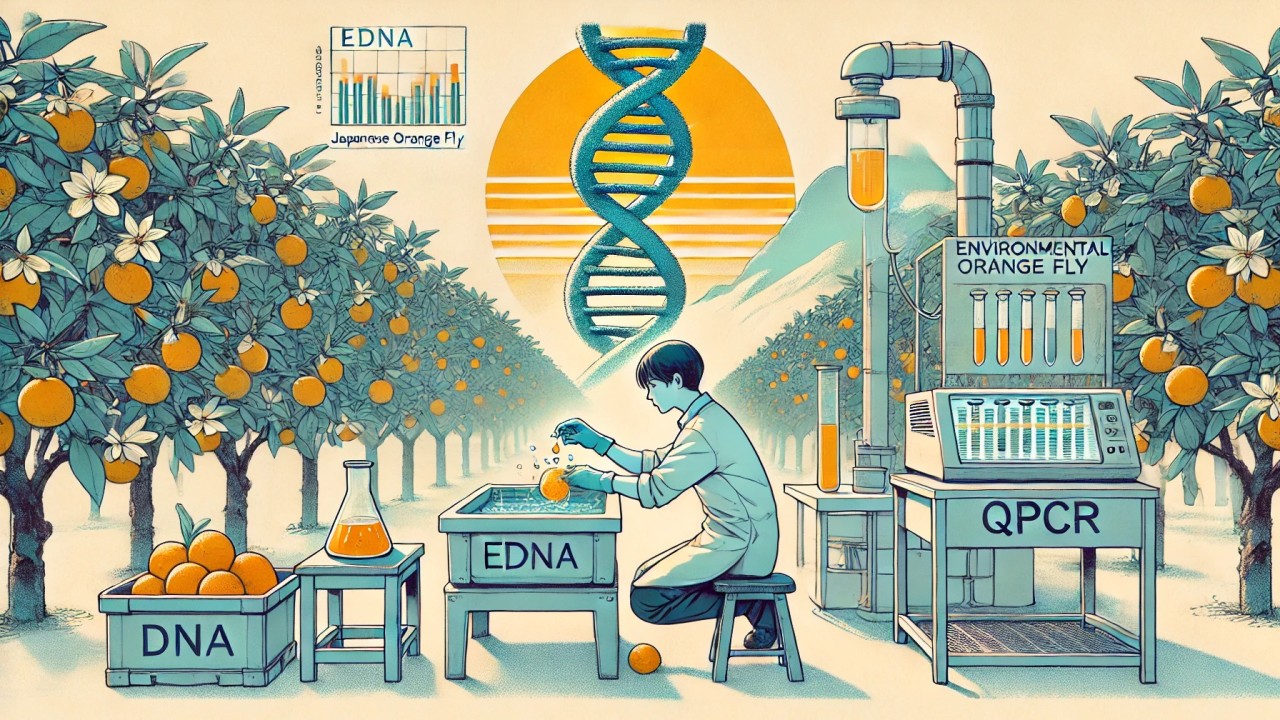
    Environmental DNA, or eDNA, has emerged as a revolutionary tool in pest management. The basic concept behind eDNA is that organisms leave behind traces of genetic material in their environment. In the case of Japanese orange fly, this DNA can be deposited on the surface of fruits during activities such as mating behaviour or even incidental licking. Researchers have now demonstrated that by simply rinsing the surface of mandarin oranges with water, it is possible to collect samples that provide evidence of the pest’s presence even when traditional indicators, such as oviposition pinholes, are absent.

    This approach has significant advantages. By detecting even minute amounts of genetic material, the eDNA method allows for earlier and non-invasive surveillance of pest populations. Instead of waiting for physical signs of infestation or employing labour-intensive trap surveys, farmers can now potentially monitor orchards more proactively, catching infestations while they are still in their initial stages.

    How eDNA Detection Works

    The eDNA detection process is both innovative and straightforward. It begins with the careful collection of mandarin oranges from the orchard. Farmers or researchers take great care to avoid contaminating the fruit with extraneous DNA. This typically involves wearing clean gloves and using sterilised plastic bags to handle the fruit, ensuring that only the natural DNA present on the fruit’s surface is collected.

    After the fruits are gathered, they are placed in a container with distilled water. The fruits are then left to soak for a specified period, during which any traces of pest DNA present on their surfaces are washed off into the water. The next step is to filter the water to capture the DNA fragments. A specialised filter, such as a Sterivex filter, is used for this purpose. Once the water has been filtered, the DNA trapped on the filter is extracted using standard DNA extraction kits.

    The final stage of the process involves analysing the extracted DNA using quantitative real-time polymerase chain reaction (qPCR). This advanced method amplifies even the tiniest quantities of DNA, making it possible to detect the genetic material left by the pest. Researchers have designed specific primers and fluorescent probes that target a mitochondrial gene unique to the Japanese orange fly. This design ensures that the detection method is both sensitive and highly specific, eliminating the risk of cross-reactivity with other organisms.

    Field Testing and Practical Results

    Field tests provided strong evidence supporting the effectiveness of eDNA-based detection for the Japanese orange fly. Early experiments concentrated on fruits that already exhibited visible signs of infestation, such as small pinholes created by egg deposition. When these fruits were rinsed in water for one hour, about 20% showed detectable levels of pest DNA. When the rinsing period was extended to 18 hours, the detection rate increased to approximately 33%. Although the longer rinsing time did improve detection slightly, statistical analysis indicated that a one-hour rinse was generally sufficient for effective DNA extraction.

    One of the most promising outcomes from the field trials was the ability of the eDNA method to detect the pest, even in fruits that appeared completely healthy. In a separate set of tests, approximately 10% of fruits with no visible signs of infestation still yielded positive results for the presence of Japanese orange fly DNA. This finding is significant because it demonstrates that the eDNA method can serve as an early warning system, alerting farmers to potential infestations long before any physical damage is visible.

    To further improve efficiency, researchers also explored the technique of pooled sampling. In this approach, one fruit displaying obvious signs of pest activity was combined with four seemingly uninfected fruits in a single water immersion. Even with this mixed sample, the method was able to detect the presence of pest DNA. Pooled sampling is particularly advantageous for large orchards where testing each individual fruit would be impractical. However, this approach requires meticulous sample handling to minimise the risk of contamination between samples.

    Field examinations conducted across various orchards reinforced the reliability of the eDNA method. In orchards with high pest densities, where adult Japanese orange flies were frequently observed, the detection rates in fruit samples ranged between 60% and 80%. Even in orchards where adult flies were not seen, the method detected eDNA in around 60% of samples, resulting in an overall average detection rate of approximately 65.7%. These consistent results suggest that eDNA analysis can reliably indicate pest presence, regardless of the density of adult flies in the area.

    To further validate the findings, researchers performed sequence analysis on the PCR amplicons obtained from the samples. The sequences were then compared with known reference sequences of the Japanese orange fly. The high degree of similarity confirmed that the eDNA detected in the samples was indeed from the target pest, providing additional confidence in the method’s accuracy and reliability.

    Advantages of eDNA in Pest Monitoring

    The advantages of eDNA detection for Japanese orange fly go beyond just technical sophistication. It also offers transformative potential for agricultural pest management by:

    Early Detection: Addressing infestations before populations grow large enough to cause significant damage.

    Non-Destructive Testing: Unlike methods that require cutting fruits, eDNA is a minimally invasive process, preserving the integrity of the produce.

    Adaptability: This method can be employed even in regions with low pest density or uncertain infestation status, offering more inclusive monitoring coverage.

    Cost-Efficiency: By enabling pooled sampling of fruits, it decreases the time and resources needed for extensive trap surveys and visual inspections.

    Implications for Agriculture and Future Advances

    The introduction of eDNA technology into pest management practices represents a significant advancement for the agricultural industry. The Japanese orange fly has long been a problematic pest due to its concealed life cycle, and traditional detection methods have proven inadequate. With the advent of eDNA detection, farmers are now equipped with a powerful tool that enables them to monitor their orchards more effectively and respond to infestations before they escalate into serious issues.

    Beyond citrus farming, the principles of eDNA detection have the potential to revolutionise pest management across a variety of crops. As research in this field continues to progress, similar methods could be developed to monitor other agricultural pests that have, until now, been difficult to detect using conventional techniques. This broader application could lead to a paradigm shift in agricultural practices, shifting the focus from reactive measures to proactive, early intervention strategies.

    Moreover, in an era where food security and environmental sustainability are critical, the integration of eDNA detection into routine pest management could prove to be a game-changer. By empowering farmers with the ability to preempt pest outbreaks, this innovative approach promises to safeguard crops, protect livelihoods, and contribute to a more sustainable agricultural future.

  • Tackling Citrus Greening Disease: How eDNA is Transforming Pest Monitoring

    Tackling Citrus Greening Disease: How eDNA is Transforming Pest Monitoring

    Citrus greening disease, also known as Huanglongbing (HLB), remains one of the most pressing threats to the global citrus industry. Not only does this debilitating disease drastically reduce crop yields, but it also undermines farmers’ livelihoods and endangers the worldwide supply of citrus products. At the centre of this challenge is a tiny insect, the Asian citrus psyllid (Diaphorina citri), which transmits the bacterium responsible for causing citrus greening. Because the disease can spread rapidly, early detection of the vector is crucial for preventing large-scale outbreaks.

    Traditionally, pest monitoring has relied on visual inspections or trapping strategies—methods that can be labour-intensive, time-consuming, and prone to errors. These conventional approaches often fall short when insect populations are small or when pests manage to evade capture. However, recent advances in environmental DNA (eDNA) analysis are offering an alternative that promises faster and more accurate detection. Drawing on recent research from Japan, this article explains how eDNA methods work, why they matter, and how they are redefining pest monitoring in modern agriculture.

    Understanding eDNA and Its Significance

    Environmental DNA, or eDNA, refers to genetic material shed by organisms into their surroundings. For the Asian citrus psyllid, this genetic trace might include saliva, excretions, or eggs deposited on leaf surfaces. By collecting and analysing leaves for these residual genetic signals, researchers can detect the presence of the psyllid without ever seeing or capturing the insect itself.

    In a research study conducted in Japan, the primary goal was to determine whether eDNA from the Asian citrus psyllid could be reliably detected on host plant leaves as an early warning sign. The questions guiding the study were:

    • How quickly can Asian citrus psyllid-derived eDNA be detected on host plants after contact?
    • How long does the eDNA remain detectable under controlled conditions?

    To answer these questions, the team used both greenhouse experiments and field surveys. In the controlled greenhouse setting, they inoculated Murraya paniculata (Orange Jasmine) seedlings with Asian citrus psyllids for periods ranging from 10 minutes to several hours. They then carried out tests to see how swiftly the eDNA became detectable on the leaves and how long it persisted, with some tests extending up to 180 days. Field surveys were also performed in citrus-growing regions, including Okinoerabujima Island in Kagoshima Prefecture, where samples were taken from Citrus spp. and Murraya trees under real-world conditions.

    Methodological Highlights: From Leaves to Lab

    The researchers’ methodology involved extracting DNA from collected leaves and then using PCR primers. These primers targeted the psyllid’s mitochondrial genes (12S, COI, ND4) as well as genes from its symbiotic bacteria (Wolbachia spp., Candidatus Carsonella spp., and Candidatus Profftella spp.). By focusing on these genetic markers, they could detect even minute amounts of the insect’s DNA. This meticulous approach also helped minimise the risk of false positives by leveraging the unique DNA signatures of the psyllid’s symbionts.

    The study’s findings were both compelling and encouraging:

    1. High Detection Accuracy Even a brief 10-minute contact between the psyllid and a host leaf was sufficient for eDNA to be picked up in lab tests.
    2. Low False Positives Certain primers occasionally flagged some related insect species, yet the presence of symbiotic bacteria such as Candidatus Carsonella and Candidatus Profftella offered an additional layer of specificity, making the method highly accurate for psyllid detection.
    3. Field Applicability Trials conducted in regions like Okinoerabujima Island demonstrated that eDNA could be recovered from leaves even where pest densities were low.
    4. Prolonged Detectability Residual eDNA persisted on leaves under controlled greenhouse conditions for up to six months, indicating that plant surfaces serve as “living traps” that can provide valuable historical data on pest presence.

    This research underscores the enormous potential of eDNA as a rapid, non-invasive tool for monitoring the Asian citrus psyllid. Such timely detection is essential for combating citrus greening disease and protecting crop yields, not only in Japan but potentially in citrus-growing regions worldwide.

    The Value of eDNA in Agricultural Pest Monitoring

    1. Early Warning and Rapid Response

    Conventional pest monitoring methods often require weeks—or even months—to detect an infestation. Traps must be set up, checked regularly, and assessed for insect counts. By contrast, eDNA allows for the detection of an insect’s presence within minutes or hours of contact with a plant. Indeed, the Japanese study showed that psyllid eDNA could be reliably identified after a mere 10 minutes of contact, and traces persisted for up to 180 days. This rapid detection capability is invaluable for triggering timely interventions and preventing large-scale disease outbreaks.

    2. Non-Invasive and Cost-Effective Surveillance

    Using host plants as natural surveillance “devices” substantially reduces the need for labour-intensive trap installation and upkeep. Researchers or farmworkers can collect leaf samples from different parts of an orchard without disturbing the crop or having to install elaborate monitoring systems. This efficiency not only lowers costs but also offers a less disruptive method, making eDNA a practical solution for both commercial growers and smallholder farmers.

    3. Targeted Pest Management

    The precise nature of eDNA detection enables farmers to deploy targeted responses. Rather than applying pesticides across entire fields, growers can focus control measures on specific areas where eDNA indicates pest presence. This targeted approach helps reduce chemical usage, mitigating environmental impacts and potentially lowering production costs.

    4. Adaptability in Real-World Conditions

    Field trials have shown that eDNA methods perform effectively under variable conditions, including regions with low psyllid densities. Leaves from both Citrus spp. and Murraya trees have proven suitable for detection, suggesting that this technology is versatile and can be integrated into existing agricultural practices with relative ease.

    Overcoming Challenges and Charting Future Directions

    While eDNA-based monitoring promises a host of benefits, it does come with certain challenges. Laboratory processes demand meticulous handling of samples, and environmental factors such as rain, wind, or extreme temperatures may affect DNA stability on leaf surfaces. False positives, though reduced by targeting the psyllid’s symbiotic bacteria, remain a consideration that calls for ongoing refinements to primer design and testing protocols.

    Current research is focused on enhancing the robustness of eDNA methodologies, ensuring reliable performance under varied environmental conditions. Researchers are also exploring the possibility of transferring these techniques to other pests and pathogens. The principles underpinning eDNA detection—capturing genetic remnants without directly collecting the organism—could revolutionise monitoring for a wide array of agricultural threats.

    Another frontier lies in integrating eDNA data with digital mapping tools such as geographic information systems (GIS). By overlaying eDNA detection results onto regional maps, policymakers and farmers can gain a clearer picture of where pests are emerging, how they spread, and which areas require immediate intervention. This data-driven approach would allow for more precise resource allocation and improved risk assessment—vital advantages as climate change and global trade patterns continue to influence pest distribution worldwide.

    Conclusion: eDNA as a Game-Changer in Agricultural Pest Management

    Environmental DNA represents a timely convergence of cutting-edge molecular science and the pressing needs of modern agriculture. The ability to detect the Asian citrus psyllid on plant leaves—without physically capturing the insect—highlights the transformative power of this approach. As citrus greening continues to threaten global citrus production, the importance of rapid, early detection cannot be overstated. By harnessing eDNA, farmers gain a sophisticated yet accessible tool that can pinpoint pest presence well before large infestations take hold.

    As research continues and field protocols are refined, eDNA monitoring will likely be integrated into routine agricultural practices. This technology presents a significant opportunity for farmers, researchers, and policymakers alike to adopt a more forward-thinking approach to pest control, one in which early detection and responsible intervention reduce losses and safeguard local ecosystems.

    Ultimately, embracing eDNA-based monitoring is an investment in a more secure and sustainable agricultural future. By bridging the gap between scientific innovation and practical field application, eDNA has the potential to reshape not only how the citrus industry tackles greening disease, but also how global agriculture confronts an ever-evolving spectrum of pest threats. With continued collaboration and investment, it may soon become a standard tool in the arsenal against pests—helping to preserve crops, strengthen livelihoods, and ensure the resilience of food systems in the face of complex environmental challenges.

  • Ecological Secrets: eDNA’s Role in Revealing Plant–Pollinator Interactions

    Ecological Secrets: eDNA’s Role in Revealing Plant–Pollinator Interactions

    Plant–pollinator interactions represent one of the most crucial relationships in ecosystems, influencing biodiversity, reproduction, and ecosystem stability. Yet, these dynamics are often difficult to study comprehensively using traditional methods of observation. A recent study from New Zealand showcases how environmental DNA (eDNA) metabarcoding significantly enhances our understanding of these interactions, revealing intricacies that had eluded past research methods. Pollinator-plant relationships are dynamic webs of interaction, pivotal not only to individual species’ survival but also to the resilience of broader ecosystems. Harnessing modern molecular tools, this study demonstrates that we are finally equipped to fully appreciate, document, and act upon the intricate interactions of plants and insects.

    How eDNA Redefines Pollination Studies

    For decades, our understanding of plant-pollinator relationships has relied heavily on direct observation and specimen collection, both of which are limited by time, visibility, and sometimes bias towards diurnal activities. eDNA radically shifts this paradigm. By identifying genetic material released into the environment—on flower petals, nearby soils, or via visiting pollinators—this non-invasive methodology provides a powerful lens to detect not just expected floral visitors but also hidden contributors, such as nocturnal or unexpectedly diverse insect communities.

    This particular study revealed an expansive and often surprising range of flower visitors. In addition to known pollinators like native bees (e.g., Leioproctus spp.), the research uncovered evidence of less obvious agents such as flies (Diptera) and native moths involved in nocturnal pollination—a phenomenon rarely studied but gaining recognition as an integral component of pollination ecology.

    Methodology: Combining Innovation and Rigour

    The study set out to explore floral visitation and the biodiversity of plant-pollinator interactions in native New Zealand Myrtaceae species like mānuka (Leptospermum scoparium) and Lophomyrtus spp. To achieve this, the research deployed eDNA metabarcoding, alongside field observations and pollen exclusion trials, allowing for a comprehensive understanding of plant-insect relationships.

    Sampling was carried out across three diverse sites: a peri-urban planted location, a natural forest edge in Rotorua, and the remote Kaimai-Mamaku Ranges. These sites were selected to evaluate different environmental contexts impacting the floral biodiversity of the target species.

    Sample Types: Insect specimens and flower samples were carefully collected. For insects, sweep nets were used at flowers across day and night cycles to capture diurnal and nocturnal visitors. Flowers were also collected individually to avoid contamination.

    Pollination Experiments: To distinguish between insect-mediated pollination and self-pollination, researchers deployed four treatments using organza bags: open access (positive control), full exclusion (negative control), daytime access only, and nighttime access only. These experiments allowed for direct comparisons of pollination success across varied conditions.

    Once collected, plant flowers and insect specimens were freeze-dried. This process preserved the genetic material by removing moisture for a minimum of 48 hours. DNA Extraction was done using a CTAB-chloroform extraction workflow. Researchers isolated molecular material from mixed samples and then used key genetic markers targeted for amplification. These were COI (Cytochrome Oxidase I) for insects, enabling species-level identification due to its high variability and trnL intron for chloroplast DNA, offering insights into plant species present on, or, interacted with by insects. Deep sequencing was done on the Illumina MiSeq platform, a next-generation system ideal for producing high-resolution genetic data.

    A Hidden Diversity of Flower Visitors

    The study identified a surprising variety of insects visiting the flowers of mānuka and Lophomyrtus species. While native bees such as Leioproctus spp. were anticipated contributors, a more diverse array of flower visitors, including flies, moths, and beetles, was detected. Notably, the study also reported species not traditionally associated with pollination. For instance, insects like Strepsicrates ejectana (a native moth), predatory flies (Dolichopodinae), and various weevils joined the more expected pollination agents. This diversity includes both pollinators and other insects whose roles may be indirect or even unrelated to pollination, such as herbivory or predation.

    The Overlooked Role of Nocturnal Pollinators

    One of the most notable findings was the evidence supporting nocturnal pollination. eDNA profiling detected native nocturnal moths visiting mānuka and Lophomyrtus flowers. While daytime pollination has traditionally garnered more attention, this study reveals that nighttime visitors actively contribute to the reproductive success of these plants. Analysis of the seed set further validated this conclusion (see later section). Flowers exposed to nocturnal pollination treatments showed pollination success, albeit at lower rates compared to daytime exposure. These findings suggest that moths and other nocturnal insects play an understated but important role in pollination, especially in ecosystems lacking the large, social bees found in other parts of the world.

    Flower Resources Beyond Pollination: A Broader Perspective

    The study also highlights the importance of floral resources in supporting a broader spectrum of ecological interactions. Many detected flower visitors, such as gall midges and predatory flies, engage with flowers not necessarily for pollination but for other purposes. For example:

    Gall Midges and Ecosystem Health: The presence of gall midges (Mycodiplosis constricta), whose larvae feed on the spores of the invasive myrtle rust pathogen (Austropuccinia psidii), suggests these insects may play a role in mitigating the spread of this disease. Floral resources could enhance the populations of these allies, providing an indirect ecological benefit.

    Non-Pollinator Interactions: Other visitors, such as weevils, leaf beetles, and predatory flies, utilise floral spaces for feeding, breeding, or hunting prey. This reflects flowers’ multifaceted roles in supporting insect biodiversity far beyond direct pollination activities.

    Site-Specific Variations

    Flower visitor communities were found to vary significantly between the sampled locations. For example, insects visiting Lophomyrtus bullata at the Kaimai-Mamaku ranges differed markedly from those found at urban sites around Rotorua. These community differences may reflect environmental factors, habitat-specific insect distributions, or plant health, particularly concerning the impacts of myrtle rust.

    Pollination Trials: Seed Set Results

    The controlled pollination trials added an experimental layer to the findings, directly linking floral visitation to plant reproductive success. Key results include:

    Highest Pollination Success: Flowers fully accessible to all insect visitors (the no-cage treatment) saw the highest seed set (37.3%), affirming the positive contributions of pollinators to mānuka reproduction.

    Differences Across Treatments: Flowers exposed during the day had a seed set success of 15.2%, while flowers accessible only at night achieved 5.8%, highlighting the comparatively greater role of diurnal pollinators but also confirming the importance of nocturnal visitation.

    Interestingly, flowers in full exclusion treatments (meant to exclude all visitors) achieved some pollination success, possibly due to self-pollination or incomplete exclusion of small insects. This finding calls for further investigation into the balance between self-pollination and insect-mediated pollination in these species.

    Implications for Ecosystem Health and Conservation

    The findings have far-reaching implications for biodiversity conservation and ecosystem management. Not only do they underline the ecological importance of mānuka and Lophomyrtus as keystone species supporting diverse insect communities, but they also reveal how targeted conservation could bolster these interactions to benefit broader ecosystems.

    The demonstrated value of floral resources in supporting both pollination and non-pollination roles suggests avenues for strategic interventions. For instance, conserving floral habitats might support insect species that contribute indirectly to ecosystem services, such as natural pest control or mitigation of pathogens like myrtle rust.

    Technology Meets Conservation—Charting a New Path

    At its core, this research illustrates how the nuanced application of eDNA metabarcoding transforms our capacity to study and conserve biodiversity. By straddling the divide between traditional observation and molecular innovation, eDNA deepens our comprehension of plant-insect relationships, uncovers previously unseen actors, and strengthens conservation science with actionable insights.

    As organisations and environmental stakeholders grapple with growing ecological crises, the inclusion of methodologies like eDNA into their strategies promises measurable benefits. Whether in guiding on-the-ground interventions or influencing policy-level biodiversity frameworks, eDNA is poised to redefine how we explore, monitor, and protect the natural world.

    Plant-pollinator interactions, more multifaceted and essential than ever appreciated, are at the heart of sustaining life. It is through tools like eDNA—and the passion of researchers pioneering these frontiers—that we can truly understand and preserve these fragile networks. Let this be an inspiring testament to the harmonious blend of traditional ecological focus and the cutting-edge technologies reshaping them for a better future.

  • Safeguarding Public Health and One Health with eDNA: Transforming Urban Water Contamination Source Tracking

    Safeguarding Public Health and One Health with eDNA: Transforming Urban Water Contamination Source Tracking

    Contamination in urban freshwater systems by faeces poses a longstanding risk to public health, compromising water quality and the sustainability of recreational sites such as beaches and rivers. Traditional monitoring methods that measure faecal indicator bacteria, including E. coli and Enterococcus, reveal water quality status but cannot conclusively identify contamination sources. A recent study underscores the potential of environmental DNA (eDNA) metabarcoding to bridge this gap. By combining eDNA metabarcoding with microbial source tracking (MST), researchers gained a fuller picture of contamination sources, demonstrating how this approach can inform both public health and One Health strategies.

    Innovating Feacal Source Tracking with eDNA Metabarcoding

    Environmental DNA, or eDNA, consists of genetic material released by organisms through skin cells, faeces, and other biological matter. Conventional MST relies on detecting specific DNA markers one at a time, each tailored to a particular host. eDNA metabarcoding, however, uses next-generation sequencing to identify universal markers—often mitochondrial genes—across multiple species simultaneously. This method broadens the search for potential pollution sources and speeds up analysis in urban water systems. In the Canadian study, researchers focused on four Lake Ontario beaches and nearby rivers, applying both eDNA metabarcoding and digital PCR-based MST.

    Methodology: Integrating eDNA Metabarcoding and MST

    Water and sand samples were taken from four Lake Ontario beaches and two river mouth sites throughout the bathing season, capturing a range of environmental conditions. DNA was extracted using standard protocols and then analysed through eDNA metabarcoding with the mitochondrial 16S rRNA gene to identify mammalian and avian taxa. Next-generation sequencing generated large datasets subsequently processed via bioinformatics pipelines, linking taxonomic identities to sources such as humans, beavers, muskrats, mallard ducks, and gulls. Data normalisation ensured a balanced representation of species across samples.

    Alongside eDNA metabarcoding, digital PCR targeted specific markers for human (HF183 Bacteroides) and bird-derived (Gull4) contamination. Given the frequent detection of human DNA in sewage-impacted sites, PCR-blocking methods were explored to reduce human DNA amplification, making it easier to detect animal-derived eDNA. The team also included markers for cattle, pigs, and chickens to investigate possible contamination from undigested food in human sewage. Results from the metabarcoding and MST analyses were then merged, creating a detailed picture of faecal pollution sources and clarifying how much contamination stemmed from sewage versus wildlife.

    Key Findings: A Comprehensive View of Faecal Pollution

    The study showed that eDNA metabarcoding successfully pinpointed a broad range of faecal contamination sources in water and sand at urban beaches and rivers. Human eDNA dominated most sites, reflecting ongoing wastewater inputs. Wild species, including beavers, muskrats, mallard ducks, and gulls, were also widespread contributors to faecal pollution. These discoveries underscored the multifaceted nature of contamination in urban areas.

    By allowing researchers to detect multiple organisms in a single test, eDNA metabarcoding surpassed conventional MST in uncovering a more diverse set of potential polluters. While MST markers target only a few species, eDNA’s reliance on universal genetic regions provided a richer tapestry of mammalian and avian diversity. Mitochondrial 16S rRNA sequencing, for instance, enabled the simultaneous identification of numerous species from each sample, enhancing overall ecosystem understanding.

    Human Contamination Indicators and Other Surprises

    Notably, the high volume of human eDNA in sewage-impacted sites made it difficult to differentiate between different intensities of human contamination. In these instances, the HF183 marker proved more accurate for identifying human faecal hotspots. This discrepancy emphasises the need to use both MST and eDNA metabarcoding for precise source attribution.

    Another unexpected finding was the frequent detection of chicken and cow DNA, likely originating from food remnants in human sewage rather than direct animal faecal inputs. This underscores the complexity of eDNA data in urban settings, where diet-related DNA can create confusion around actual contamination sources.

    By blending eDNA metabarcoding with MST, the researchers achieved a more nuanced portrayal of faecal pollution. eDNA offered extensive biodiversity information, while MST delivered high specificity for key contributors like humans and gulls. This synthesis enabled better distinctions between sewage-derived and wildlife-driven contamination, providing clearer targets for public health interventions.

    Public Health and One Health Implications

    A notable advantage of this two-pronged approach is its direct relevance to public health and One Health objectives. Faecal pollution can spread waterborne diseases, foster antimicrobial resistance, and harm ecosystems. For instance, beavers and muskrats identified by eDNA often harbour Giardia and Cryptosporidium, both of which can cause gastrointestinal illness in humans. Traditional bacterial indicators do not always align with these pathogens, making advanced detection methods essential for preventive strategies.

    Better identification of avian pollution, such as gull droppings, could guide site-specific measures like habitat alterations to limit faecal entry into recreational waters. The One Health aspect is evident in the detection of urban mammals like raccoons and foxes, which inhabit the human-animal boundary and can transmit zoonotic diseases. Integrating these insights allows health authorities to devise interventions that protect people, wildlife, and the environment.

    Challenges and Future Directions

    Despite promising outcomes, certain obstacles remain. The overabundance of human eDNA in sewage-heavy areas impedes the ability to assess lesser sources, suggesting a need for improved PCR-blocking methods. Additionally, while eDNA metabarcoding captures a broad range of species, it lacks the pinpoint accuracy of MST. Consequently, practitioners should use a combined approach for the best results.

    Another open question is the longevity and decay rate of eDNA in different conditions. Mitochondrial DNA may persist longer than bacterial markers, potentially skewing interpretations of contamination timing or severity. Overcoming these limitations is crucial for fully harnessing eDNA’s capabilities.

    Translating Innovation into Practical Action

    The main value of this new methodology lies in its potential for real-world impact. In areas heavily influenced by wastewater, conventional monitoring can be inconclusive, but a mix of eDNA metabarcoding and MST can offer clearer insights. With scalable technologies, local authorities and resource-limited agencies could adopt these methods for detailed contamination mapping, guiding interventions that suit each site’s specific challenges.

    Public health programmes could benefit from quicker pathogen detection, while environmental agencies might use these findings to balance recreational interests with habitat conservation. Whether the goal is safeguarding human health, preserving urban wildlife, or restoring natural ecosystems, eDNA-based techniques could serve as a foundation for more strategic water management.

    Overall, the fusion of eDNA metabarcoding with MST raises the bar for faecal source tracking. By capturing a wider suite of organisms and honing in on critical indicators, researchers and policymakers can gain a deeper understanding of contamination patterns. This holistic perspective aligns with One Health principles, reflecting a world in which human, animal, and environmental health are intricately connected. If further optimised, this integrated framework could become a powerful tool for safeguarding public health, preserving ecosystems, and informing evidence-based decision-making.

    Moving forward, broader deployment of eDNA metabarcoding across varied geographic regions could refine our understanding of faecal pollution patterns and their evolution over time. Long-term, routine sampling might reveal seasonal shifts in contamination sources or pinpoint emerging threats, such as novel pathogens or antibiotic-resistant microbes. Moreover, integrating eDNA findings with data from land-use surveys, wildlife population studies, and climate models could illuminate the complex factors driving pollution hotspots. As urban populations continue to expand, safeguarding water resources will require adaptive strategies that span sectors and disciplines, reflecting the essence of One Health collaboration. With each advance in eDNA technology, the gap between scientific discovery and practical application narrows, promising solutions that benefit human well-being, protect wildlife habitats, and preserve the integrity of our shared environment. Ultimately, eDNA stands as an evolving frontier in modern environmental stewardship.