
Month: January 2026

  • Ants – Teamwork, and the Power of Microtasks.

    Ants – Teamwork, and the Power of Microtasks.

    On a long train journey from a conference, I spotted a single ant crawling across the table. Instinctively, I flicked it away, much to the chagrin of my travel partner, who had been watching it for some time, entertained by its foraging behaviour. That flick brought me bad karma, as I went on to forget my luggage on the train! The single ant stood no chance against me; however, I have been on the receiving end of ants. In a study in Ghana, we tested the potential of using light traps housed in a sticky, triangular-shaped trap to attract and capture flying pests.

    Picture this: a square plot of land with lamps at each corner, each casting a different colour—blue, red, white, and UV. Moths are attracted to light, and this setup was designed to determine the most effective light spectrum for attracting them. From a scientific standpoint, the system was sound. What we had not accounted for were the ants. When you see a single ant near a light trap, you think nothing of it. It registers as background noise, an incidental presence in a system built for something larger, something winged, something visible.

    Overnight, the ants figured that the traps with the trapped insects offered easy, stationary, concentrated food. A communication signal was transmitted, and, by sheer teamwork and coordination, they overcame the sticky trap surface. By morning, they had stripped the traps clean. And what’s more, it was not a single ant in play this time, like the one on the train. This time, the ants had strength in numbers, defending, stripping the stuck insects away, holding us at bay.  We had to laugh in frustration and with grudging respect; they were small but mighty.
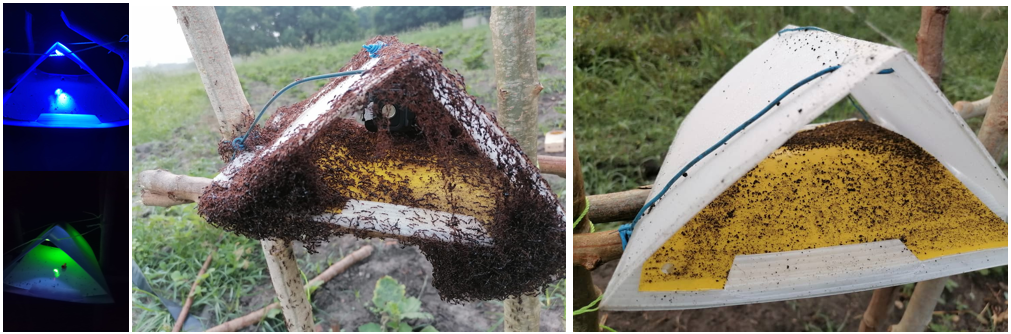
    Our light-trap set-up at night was overrun by ants, which completely cleaned out the traps, leaving behind soil particles; this is likely how they overcame the yellow sticky surface. Photos: Francis Wamonje

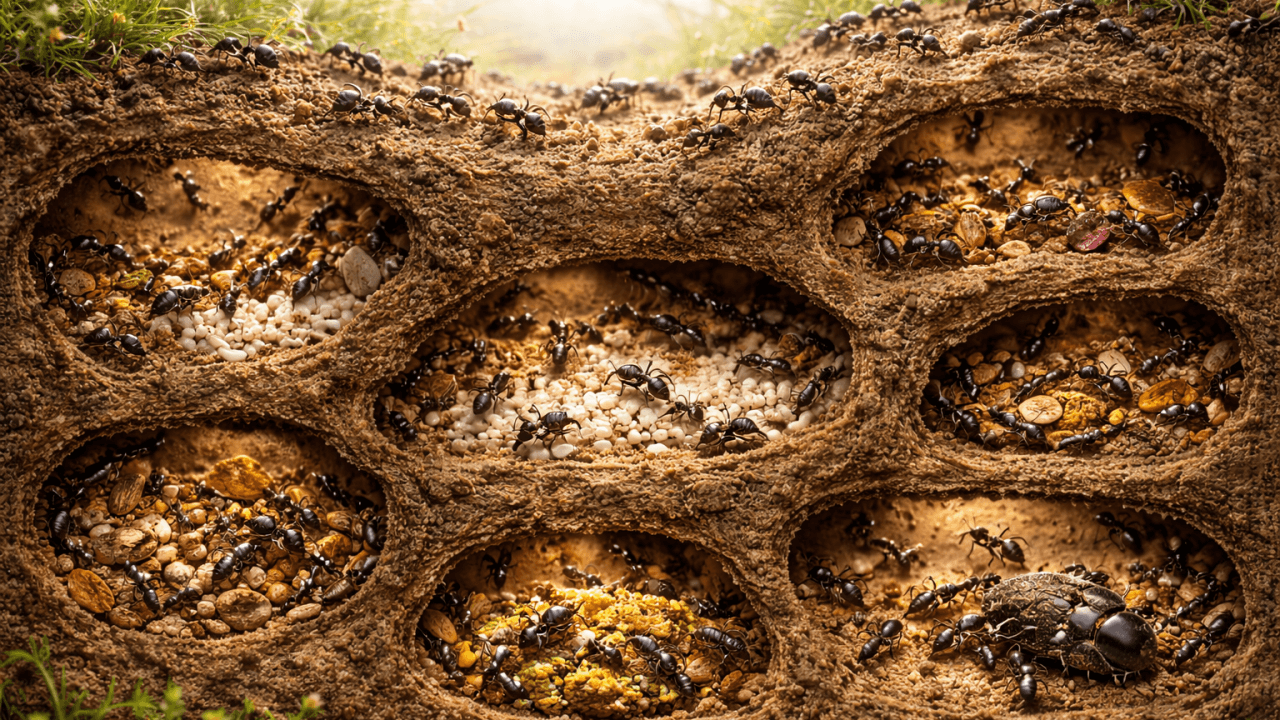
    Here’s the catch: no single ant performs a glamorous, heroic task; instead, they divide the entire action into countless microtasks, move organically, and execute. An ant, on its own, is almost nothing, easily ignored and dismissed. Yet when ants work together, they move objects larger than themselves, build underground cities, and quietly reshape entire landscapes.

    This is the power of microtasks.

    A microtask is a small, clearly defined unit of work that can be completed without heroics, prolonged effort, or excessive authority, yet, when repeated and shared, contributes to outcomes far larger than itself. In human systems, microtasks are the building blocks of progress. They are the everyday actions that sustain organisations, communities, and societies, even though they rarely attract attention. Answering an email thoughtfully. Recording an observation accurately. Showing up on time. Cleaning a shared space. Passing information along reliably. None of these actions changes the world on its own, but together they do.

    Microtasks work because they respect human limits. They recognise that people have finite energy, attention, and time. Rather than demanding constant excellence or continuous urgency, microtasks invite consistency. They lower the barrier to participation and increase the likelihood of completion.

    Like ants in a colony, humans function best when responsibility is distributed, effort is shared, and progress is cumulative. Microtasks allow individuals to contribute meaningfully without being overwhelmed and enable systems to move forward without relying on a few exhausted heroes.

    The ant is one of the insects I write about in my recent book ‘The Kingdom of Small Things’ To learn more about the simple yet powerful lesson of the ant, pick up a copy, now available on Amazon and on Kindle.
  • The Butterfly Is Not the Caterpillar

    The Butterfly Is Not the Caterpillar

    The first time most of us encounter a butterfly, we meet it with wonder. A flash of colour, a moment of stillness. As children, butterflies arrive as beauty. We all remember the first time holding one- the powdery shimmer it leaves on your fingers. A butterfly feels light, fleeting, almost unnecessary, and yet somehow essential.

    For scientists, however, the relationship is more complicated. In my own work, butterflies and moths have often entered the story not as symbols but as data points, and sometimes even as problems. In one project in Ghana, we studied the species Leucinodes, a pest of eggplant better known as the Eggplant fruit and shoot borer. The damage was not caused by the adult moth, which is small, almost elegant, and easy to overlook. The destruction came earlier, in the caterpillar stage, hidden deep within the fruit, consuming relentlessly. The irony is striking. The stage that does the damage looks ordinary, even unpleasant. The stage we admire is delicate, winged, and seemingly harmless.

    In another project, we are studying the diversity of butterflies following forest restoration in Kenya. Here, butterflies have returned in a different role altogether. They are no longer pests or curiosities but indicators, signals that something in the ecosystem is healing. As the population and diversity of butterflies increase, we know the forest is beginning to breathe again. Same organism. Different meaning. Different role.

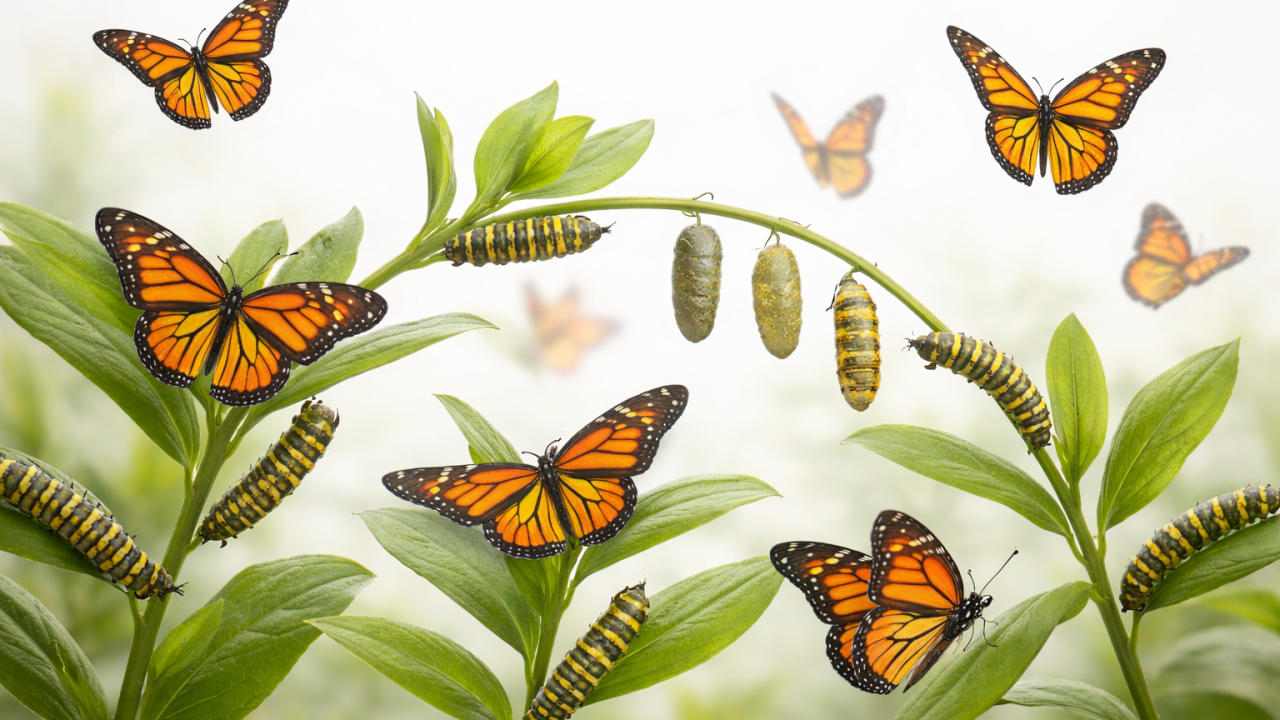
    And this is where the butterfly becomes more than biology. Scientifically, we know that a caterpillar does not “improve” into a butterfly. It dissolves. Inside the cocoon, much of the old structure breaks down completely. What emerges is not a polished version of the past but something fundamentally new. The caterpillar cannot come with the butterfly.

    This is the part we often skip when we speak of transformation. We favour the language of growth. We are less comfortable with the language of loss. But metamorphosis demands surrender. Old habits, identities, and ways of being cannot simply be carried forward. They must be let go, sometimes painfully, sometimes quietly, often invisibly.

    In work, careers, organisations, and life, we often cling to caterpillar logic while seeking butterfly outcomes. We want change without dissolution, transformation without discomfort, and beauty without the dark pause of the cocoon. Nature does not work that way.

    The butterfly teaches us that becoming requires un-becoming. That some phases of our lives are meant to end completely. That which once consumed and survived must give way to something that serves, pollinates, and moves lightly through the world.

    And perhaps that is the deeper lesson: the systems we admire most, forests, fields, and communities, are sustained not by permanent forms but by timely transitions. The caterpillar is necessary. The butterfly is necessary. But they cannot coexist. And so the question the butterfly leaves us with is not whether we want transformation, but whether we are willing to let the old shape dissolve so the new one can emerge.

    The butterfly is one of the insects I write about in my recent book ‘The Kingdom of Small Things’ To learn more about the simple yet powerful lesson of the butterfly, pick up a copy, now available on Amazon and on Kindle.

  • What if the smallest creatures carry the greatest truths?

    What if the smallest creatures carry the greatest truths?

    It has been a little while since I last posted on 52 Science Stories, so this feels like a good moment to say hello again, and to explain the quiet.

    I have not stepped away from eDNA, nor from the work of sharing how it can deepen biodiversity monitoring and ecological understanding. Far from it. Over the coming months, I’ll be sharing new work with colleagues in Ghana, Kenya, and the UK, using eDNA to track pollinators and pests in ways that genuinely excite me.

    But something else has been happening in the background.

    Between writing about insects, ecology, and science, a pattern kept resurfacing. The smallest creatures seemed to carry the largest lessons. Lessons about work, discipline, systems, wisdom, and how life holds together. I tried to set the thought aside, but it wouldn’t oblige.

    So, over the past few months, I’ve been writing a very different kind of book. One that surprised me as much as it reshaped me. It explores wisdom, work, faith, and the quiet logic of our lives. All this was revealed through some of the smallest creatures in creation – insects.

    It’s called The Kingdom of Small Things.

    Before it formally launches later in the year (with bells and whistles), I wanted to share this first with the community that has shaped me. I could think of none better than those who’ve read 52 Science Stories, walked alongside the ideas, and offered steady encouragement from the margins. All I ask is this: read it, and if it resonates, share a reflection or a review. Not for my sake, but because I believe the message itself matters.

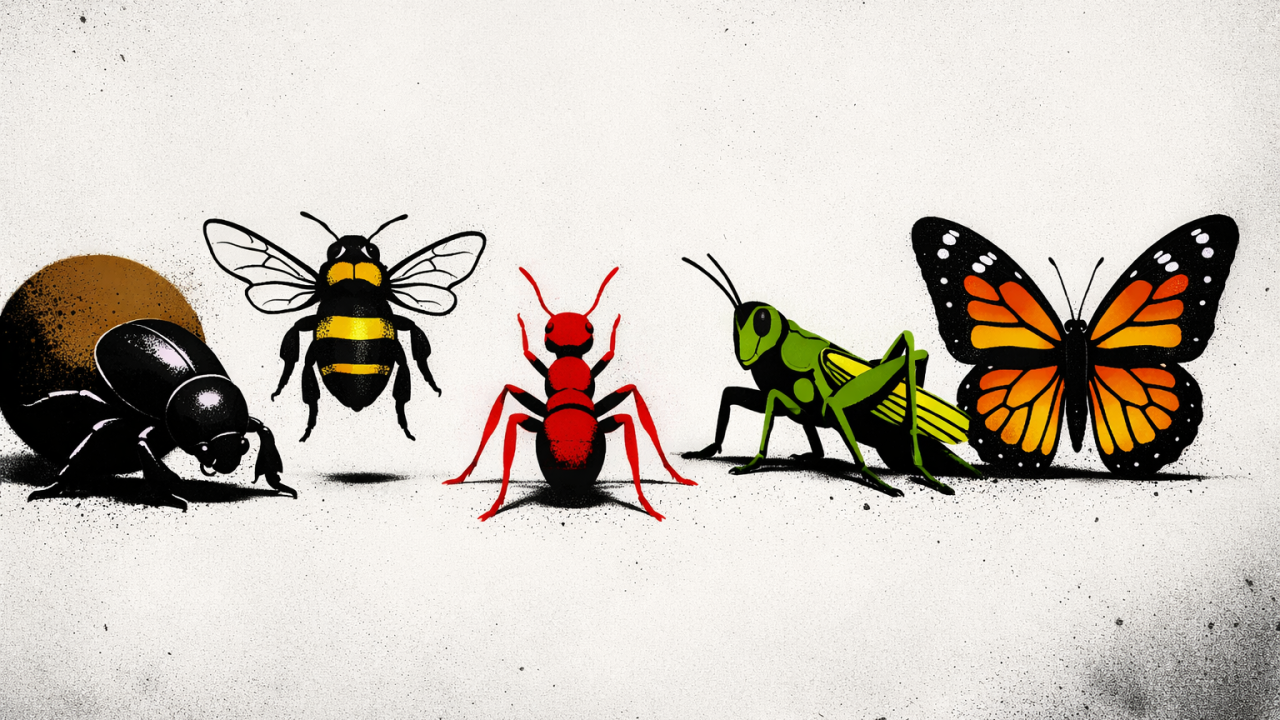
    This is not a science book. It’s not a leadership manual. And it isn’t motivational in the usual sense. I think of it as a book about learning to see again. About noticing the intelligence woven into creation. Especially in five insects we tend to overlook: the ant, the bee, the locust, the dung beetle, and the butterfly.

    📍 In Kenya, physical copies will be available from mid-January. DM me if you would like a copy, and I will respond within the day.

    📍 Worldwide, the book is available on Amazon Kindle as an eBook and will soon be available to order in paperback. Here is the link.

    Over the following weeks, I will be sharing some delightful insights from and about the book.

    Thank you for being so supportive over the past year. I am genuinely very grateful.