
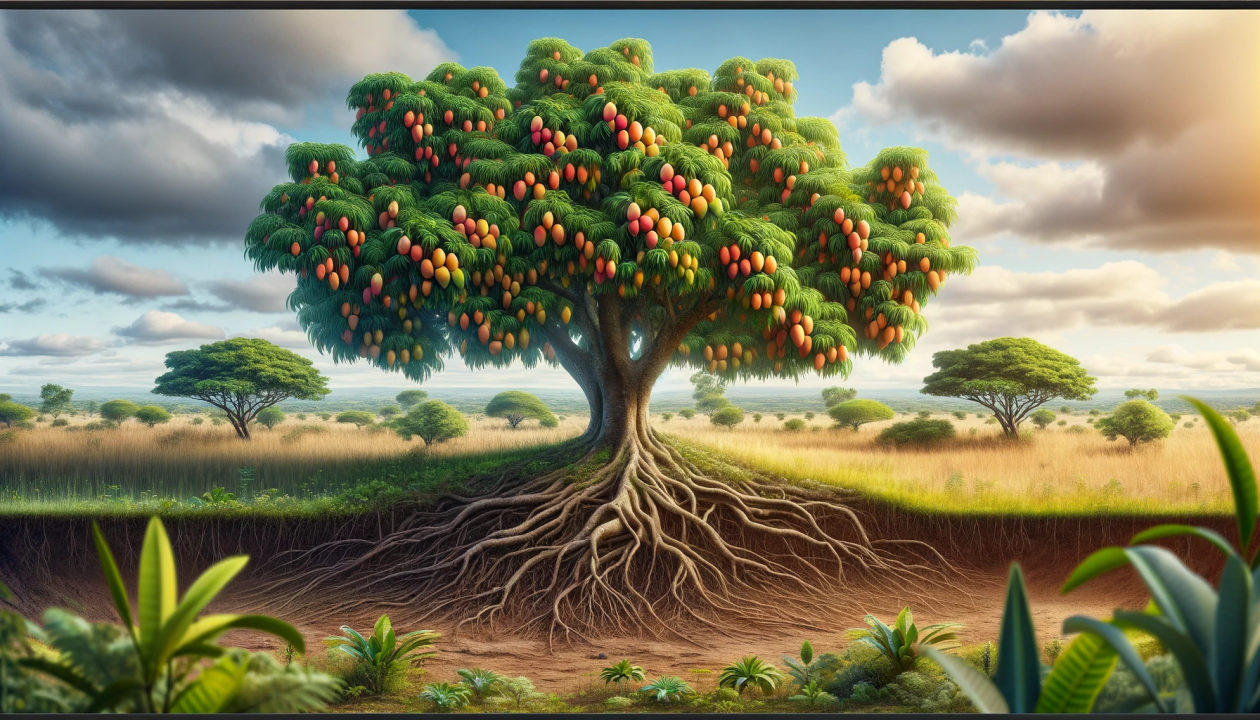
As the global community grapples with the alarming rise of atmospheric CO2 concentrations, a significant contributor to climate change, innovative solutions are imperative. Among these, agroforestry in the form of mango agroforests in Cameroon offers hope. A 2023 study published by Cameroonian researchers from the Department of Life Science, University of Bertoua, the Department of Biological Sciences, University of Ngaoundere, and the Agricultural Research Institution for the Development, Agricultural Research Polyvalent Station of Minko, Cameroon, a compelling case for their dual role: contributing significantly to carbon sequestration and serving as reservoirs of biodiversity was shown. Their findings represent a unique intersection where agricultural productivity meets ecological responsibility, potentially transforming the landscape of environmental conservation strategies.
A Dive into Cameroon’s Mango Agroforests
This research was carried out in the Central African country of Cameroon in the Adamawa region, which is noted for its diverse ecological landscapes. The Adamawa plateau is known as the country’s water castle, and it separates Cameroon into two separate hydrographic regions and two climatic regimes. The study focused on mango stands of three different ages – 5, 15, and 22 years – and compared them against a backdrop of a natural savannah. This comparison aimed to measure the variances in species diversity and carbon storage capacity. To collect data, researchers established community sampling units across various sites. These units enabled a comprehensive understanding of the floristic compositions and ecological structures present. This approach was instrumental in providing valuable insights into how these agroforests function as ecosystems, contributing to the broader narrative of tropical biodiversity and carbon sequestration.
Surprising Findings: Biodiversity and Carbon Storage
The study’s results were eye-opening, revealing a fascinating ecological narrative. Mango agroforests, depending on their age, demonstrated noteworthy differences in species diversity and carbon storage capabilities. The younger stands, though less diverse in plant species, showed a notable presence of biodiversity. In contrast, the older stands demonstrated a robust increase in both plant diversity and carbon storage, rivalling and, in some aspects, surpassing the natural savannah. These findings challenge the conventional view about agroforestry systems as mere agricultural lands, positioning them as crucial ecological assets. This revelation posits that mango agroforests can be a critical tool in the fight against climate change, offering a sustainable approach to land use that benefits both the environment and agriculture.
Environmental and Economic Implications
These revelations have far-reaching implications, both environmentally and economically. From an ecological standpoint, mango agroforests are proving to be vital habitats for diverse species, including those under threat, and crucial contributors to carbon storage. Economically, quantifying these agroforests’ carbon sequestration capacity opens the door to potential financial rewards through ecological service payments. This offers a sustainable income source and incentivizes the maintenance and expansion of these biodiversity-rich systems. Such economic incentives can play a crucial role in encouraging communities to prioritize ecological considerations in their farming practices, fostering a more sustainable relationship with the land.
Agroforestry as a Sustainable Development Tool
This study underscores the importance of agroforestry in sustainable development. Mango agroforests in Cameroon exemplify how integrating trees into agricultural landscapes can create environments conducive to biodiversity conservation and carbon sequestration. Furthermore, by linking these ecological benefits to economic incentives like the carbon market, agroforests can transform into a sustainable livelihood for local farmers. This approach aligns with the sustainable development goals and provides a model for environmental stewardship that can be replicated in other regions. It demonstrates how agricultural practices can evolve to meet human needs and environmental objectives, creating a more sustainable and resilient future.
Thoughts on the future of mango agroecology: involved and informed citizens
The insights from Cameroon’s mango agroforests offer a new perspective on the potential of agroforestry in environmental conservation and climate change mitigation. Integrating cutting-edge scientific techniques and citizen participation becomes crucial as monocultures threaten biodiversity and ecosystem health. Citizens can and should be involved in biodiversity monitoring. Techniques such as eDNA-based monitoring do not require specialist training for sample acquisition. This offers an avenue for local communities to actively participate in generating their biodiversity stories. This approach enhances their understanding of biodiversity in mango agroecosystems, which is vital for developing effective conservation strategies. It is citizens who are the ultimate deployers and beneficiaries of sustainable practices. Their engagement can ensure a more balanced and environmentally conscious approach to land use, paving the way towards achieving global sustainability goals.
Leave a Reply