
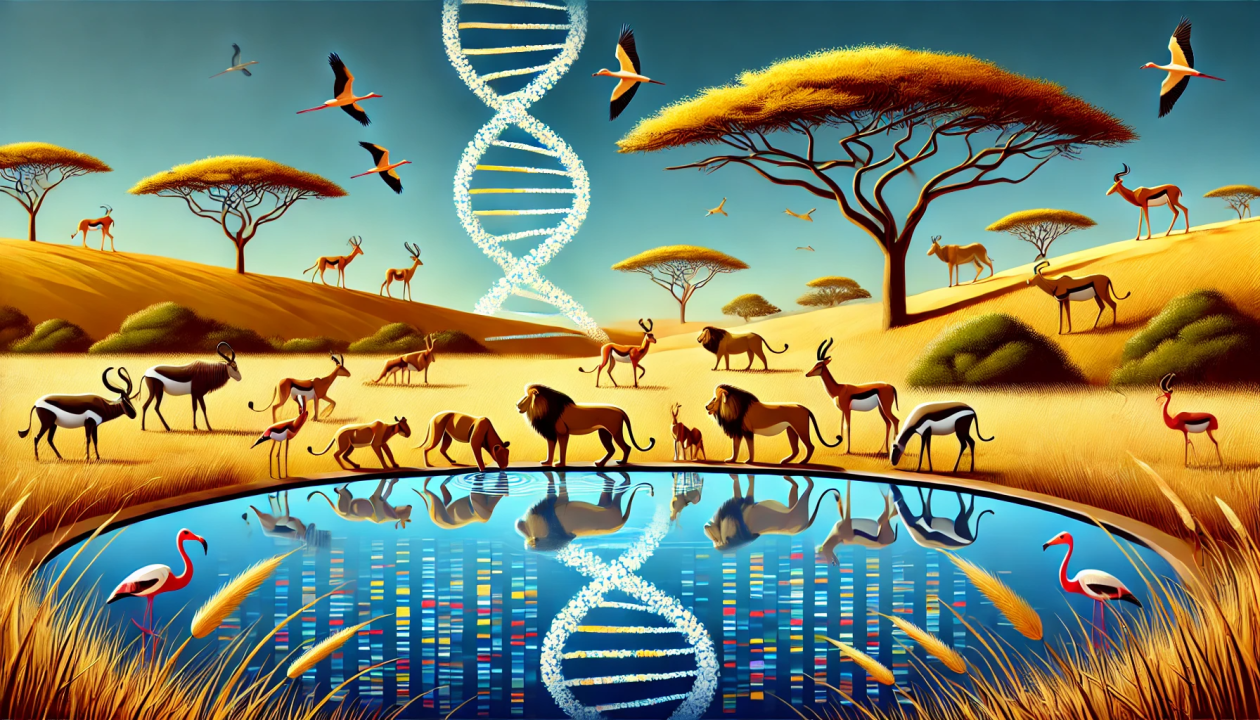
Embracing cutting-edge technologies will be essential in efforts to safeguard the planet’s natural heritage for future generations. Environmental DNA (eDNA) is transforming biodiversity monitoring, offering a non-invasive way to assess ecosystem health. The concept of eDNA is simple yet powerful: organisms shed DNA into their surroundings, and by collecting and analysing this genetic material, we can identify species present in an ecosystem without the need for direct observation.
eDNA extraction from water samples has proven highly effective in aquatic ecosystems. While widely used in temperate regions, its application in tropical and subtropical areas, especially in Africa, remains limited. Adapting eDNA techniques to diverse environments like arid savannas poses unique challenges. However, a recent study conducted in Botswana’s Botsalano Game Reserve aims to change that by optimising eDNA sampling methods for savanna waterholes – critical hotspots for wildlife in arid regions.
Why are Savanna Waterholes a Big Deal?
Savannas, also known as grasslands, are a dominant feature of the African landscape. They span approximately 40% of the continent’s total area, covering over 13 million square kilometres (5 million square miles). These vast expanses of grass-dominated ecosystems stretch across much of central Africa, extending from the southern edges of the Sahara and Sahel regions down to the northern fringes of the continent’s southern tip.
Waterholes in southern African savannas serve as vital gathering points for diverse wildlife, especially during dry seasons. These oases in arid landscapes offer researchers unique opportunities to monitor terrestrial mammal populations. However, the application of eDNA techniques in these environments presents several challenges:
High turbidity: Savanna waterholes often contain high levels of suspended particles, making water filtration difficult.
Warm temperatures: The heat can accelerate DNA degradation, potentially affecting sample quality.
Limited infrastructure: Remote locations may lack access to electricity and refrigeration, complicating sample preservation.
Study Insights: Optimising the eDNA Workflow
The study focused on optimising the eDNA workflow, from sample collection to DNA extraction, to enhance the detection of terrestrial mammals that frequent these waterholes. The researchers systematically examined five critical variables in the eDNA sample processing workflow: eDNA concentration methods, Prefiltration techniques, Filter types, DNA preservation methods and DNA extraction methods.
This section may favour the heavy hitters, but I will keep it as simple as possible. The study’s findings provide practical guidelines for researchers and conservationists working in similar remote and challenging environments.
eDNA Concentration: Filtration vs. Centrifugation- While centrifugation allowed for processing larger water volumes, filtration proved more efficient in capturing high-quality DNA.
Prefiltration (if applicable)- Prefiltration slightly increased the volume of water processed, but overall DNA yield did not vary significantly between prefiltered and non-prefiltered samples.
Filter Type Matters: Glass fiber filters versus Sterivex filters – Glass fiber filters (0.7 µm pore size) outperformed Sterivex filters (0.45 µm pore size) in preserving DNA quality and yield. This suggests that coarser filters might be more effective in turbid environments, as they offer better water throughput and higher DNA recovery rates.
Preservation Solutions: Longmire’s solution versus desiccant beads- Longmire’s solution proved superior to desiccant beads for preserving DNA at ambient temperatures. This was particularly important given the lack of refrigeration. However, the researchers suggest adding sodium azide to the solution to prevent microbial growth, especially for samples with high biological activity.
Streamlined DNA Extraction: Commercial spin column kits vs Phenol-Chloroform isoamyl extraction- Commercial spin-column extraction kits, such as Qiagen’s DNeasy PowerSoil Kit, effectively removed inhibitors and provided consistent DNA quality and yield without purification steps.
In downstream assessments, the researchers strongly recommended using multiple genetic markers to maximise species detection. In this study, the researchers used two genetic markers MiMammal and 12SV5, which detected 20 vertebrate species, including 11 mammals, across 26 samples. The 12SV5 marker identified more vertebrate species overall (13 species), while the MiMammal marker detected more mammal species (eight species). Notably. the overlap between the species detected by the two markers was minimal, with only two mammal species detected by both.
Implications for Conservation and Management
In many African countries, savannah landscapes are a national treasure. These landscapes host a wide array of wildlife, making them a major tourist attraction. The value of managing the savannah and its wildlife on the economy, for biodiversity and as a resource for future generations is incalculable. This study paves the way for more effective eDNA-based biodiversity monitoring in understudied ecosystems such as African savannas. Focused metabarcoding studies, applying these optimised methods, are crucial for a comprehensive understanding of terrestrial and aquatic biodiversity in these systems. Some potential applications include rapid biodiversity assessments, rare species detection, Invasive species monitoring and long-term ecosystem health tracking.
How do we make this better?
The optimisation of eDNA techniques for savanna waterholes represents an important milestone in African wildlife monitoring. Several challenges remain in fully realising the potential of eDNA monitoring in African savannas. Expanding genetic databases for African wildlife is crucial for accurate species identification. Further research is needed to reliably link eDNA concentrations to animal abundance or biomass. Understanding how eDNA signals persist and disperse in savanna waterholes will improve sampling strategies. Additionally, determining how eDNA data can best complement existing wildlife monitoring techniques is essential for widespread adoption. For conservationists, researchers, and policymakers working to protect Africa’s iconic wildlife, this innovative approach offers a powerful new tool in the fight against biodiversity loss.
Leave a Reply