
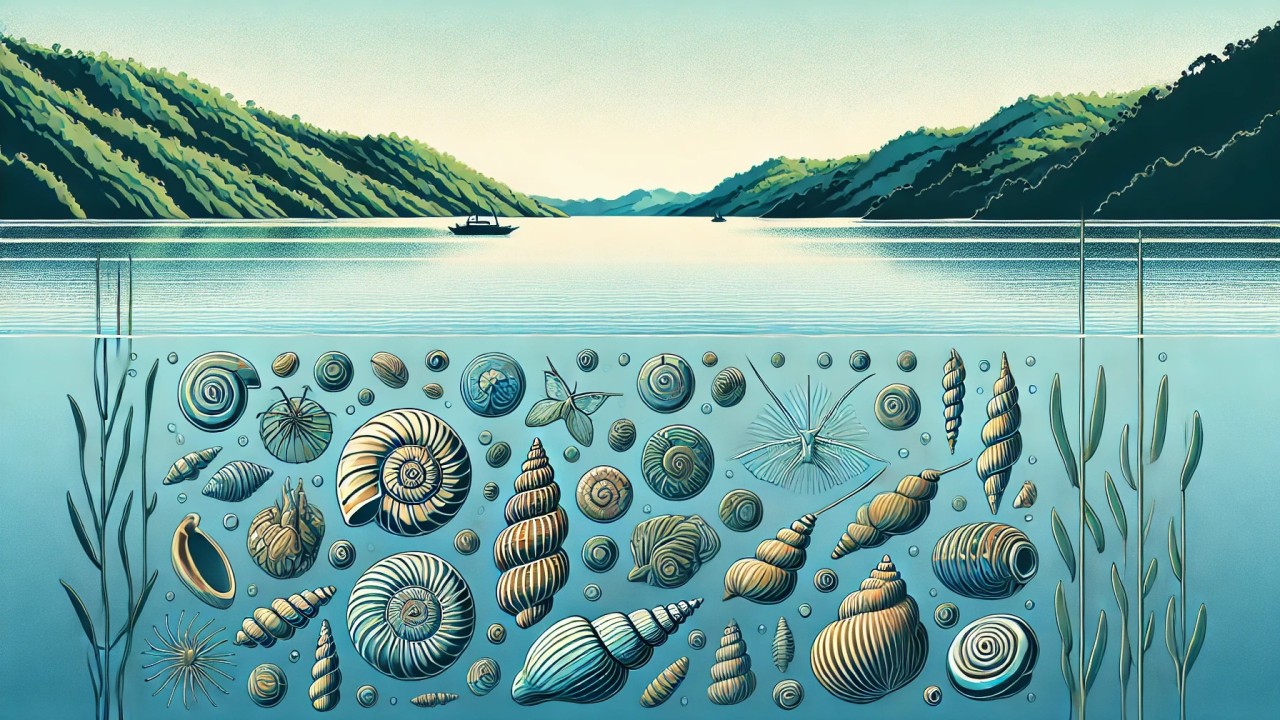
Rwanda, often referred to as the “Land of a Thousand Hills,” is a nation rich in natural beauty and cultural heritage. Known for its stunning landscapes, including the rolling terrain, lush greenery, and vibrant wildlife, Rwanda stands as a symbol of resilience and progress, following a history marked by adversity. This small landlocked country in East Africa has made remarkable progress since the devastating genocide of 1994, transforming itself into a model of stability, economic growth, and environmental stewardship. One of the jewels of Rwanda’s natural treasures is Lake Kivu, which straddles the border between Rwanda and the Democratic Republic of Congo.
The Marvels of Lake Kivu: A Unique Aquatic Ecosystem
Lake Kivu is one of Africa’s Great Lakes, sitting at an elevation of 1,460 meters above sea level. Its crystal-clear waters stretch over 2,700 square kilometres, making it the 15th-largest lake in the world by volume. But what makes Lake Kivu truly special goes far beyond its surface beauty. Beneath its tranquil waters, Lake Kivu harbours a unique ecosystem and vast reserves of dissolved gases, particularly methane and carbon dioxide. This unusual composition is a result of the lake’s volcanic origins and ongoing geothermal activity. While these gases pose potential risks, they also represent a significant opportunity for clean energy production – a fact that has not escaped the notice of Rwanda’s forward-thinking government.
For many years, Lake Kivu was believed to be relatively species-poor compared to other lakes in the East African Rift. The harsh environmental conditions and historical volcanic activity were thought to suppress the development of diverse aquatic life. However, recent studies reveal a different story. Recent research has shed new light on the lake’s biodiversity, particularly its molluscan fauna, revealing that Lake Kivu’s mollusc population is more diverse than previously thought. The malacofauna, or the community of molluscs, in Lake Kivu plays a crucial role in the lake’s ecosystem. These creatures, which include snails and bivalves, are integral to nutrient cycling and serve as a food source for a variety of fish and other aquatic organisms. Notably, some molluscs are also intermediate hosts for diseases affecting both humans and livestock, which makes their study crucial for public health.
Biodiversity Under the Surface
The researchers carried out extensive fieldwork from October to November 2022, sampling molluscs in the northern, central, and southern parts of Lake Kivu. They also incorporated previously sampled material from 2019, 2018, and 2010. In total, 34 sites with 64 collecting points were surveyed, representing different collecting depths. Additionally, samples from tributaries collected in 2014 were included for comparison.
Various sampling methods were employed depending on the location and depth. Shore samples (0-0.5 m depth) were collected using a scoop net and a Surber net. Lake sampling at depths of 0.6-33 m was done using an Ekman’s bottom grab from a motorised boat, with depth measured by an echo sounder. All sampled materials were sieved and preserved in 80% ethanol.
Specimen identification was conducted to species level where possible, based on morphology (shell shapes and appearance). Two specimens of each species from each site were photographed for documentation. Genetic analysis was performed on selected specimens to complement morphological identification. DNA was extracted from foot muscle tissue of 96 specimens representing 9 genera. Gene fragments of mitochondrial COI and 16S rRNA were amplified and sequenced. The resulting sequences were compared to databases for identification and genetic comparisons. For ecological analyses, the researchers calculated diversity indices, created heatmaps to visualise spatial distribution, and used statistical tests to analyse differences in abundance across sites, species, and environmental factors.
A Surprising Diversity of Aquatic Life
The study revealed that the mollusc fauna of Lake Kivu is more diverse than previously thought, although still relatively poor compared to other African Great Lakes. Eight species (seven gastropod and one bivalve species) belonging to seven genera and six families were identified. Some species, like Sphaerium cf. hartmanni, were recorded for the first time in Lake Kivu. The researchers found that living mollusc populations are restricted to a narrow fringe of littoral substrates, but some species occur much deeper than previously known, down to a maximum depth of 15 meters. Interestingly, the mollusc fauna displays ‘Nilotic’ biogeographic connections, with affinities to Lake Edward, likely due to previous hydrographic connectivity.
The study also uncovered significant differences in mollusc diversity and abundance between the northern and southern basins of Lake Kivu. The northern basin had lower species richness and more sites with only empty shells, which may be attributed to recent volcanic eruptions and geochemical stressors. In contrast, the southern basin showed higher diversity and abundance of living molluscs. The researchers found that anthropogenic disturbances, such as site utilisation and substrate types, significantly influenced mollusc abundance. Additionally, the presence of several potential intermediate host snails for schistosomiasis and fasciolosis in Lake Kivu and its tributaries highlights the need for further parasitological studies to assess potential health risks for local communities and their livestock.
The Importance of This Biodiversity
Understanding the diversity and distribution of molluscs in Lake Kivu has practical implications for ecology, conservation, and public health. Molluscs are bioindicators, meaning their presence, abundance, and health can inform us about the broader health of the aquatic ecosystem. They help in monitoring water quality and the impacts of pollution or other anthropogenic activities.
The study has uncovered significant insights into the biodiversity of Lake Kivu, and more work remains to be done. There is a need for continued and expanded research to fully understand the lake’s ecology. Molecular techniques like DNA barcoding have been invaluable in this research, aiding in the accurate identification of species that are often difficult to distinguish by morphology alone. Future studies incorporating these methods can bolster our knowledge and allow for better regional and global comparisons of biodiversity.
Furthermore, effective management strategies must be developed to protect and enhance the biodiversity of Lake Kivu. This involves addressing ongoing anthropogenic disturbances such as pollution from urban centres, agriculture, and industrial activities. Policies promoting sustainable practices in these areas can mitigate negative impacts on the lake’s ecosystem. Additionally, the exploration of methane extraction must be balanced with environmental conservation. While this provides a clean energy source, it must not compromise the lake’s delicate ecological balance. Ensuring sustainable practices in methane extraction will safeguard the biodiversity of Lake Kivu for future generations.
Leave a Reply