
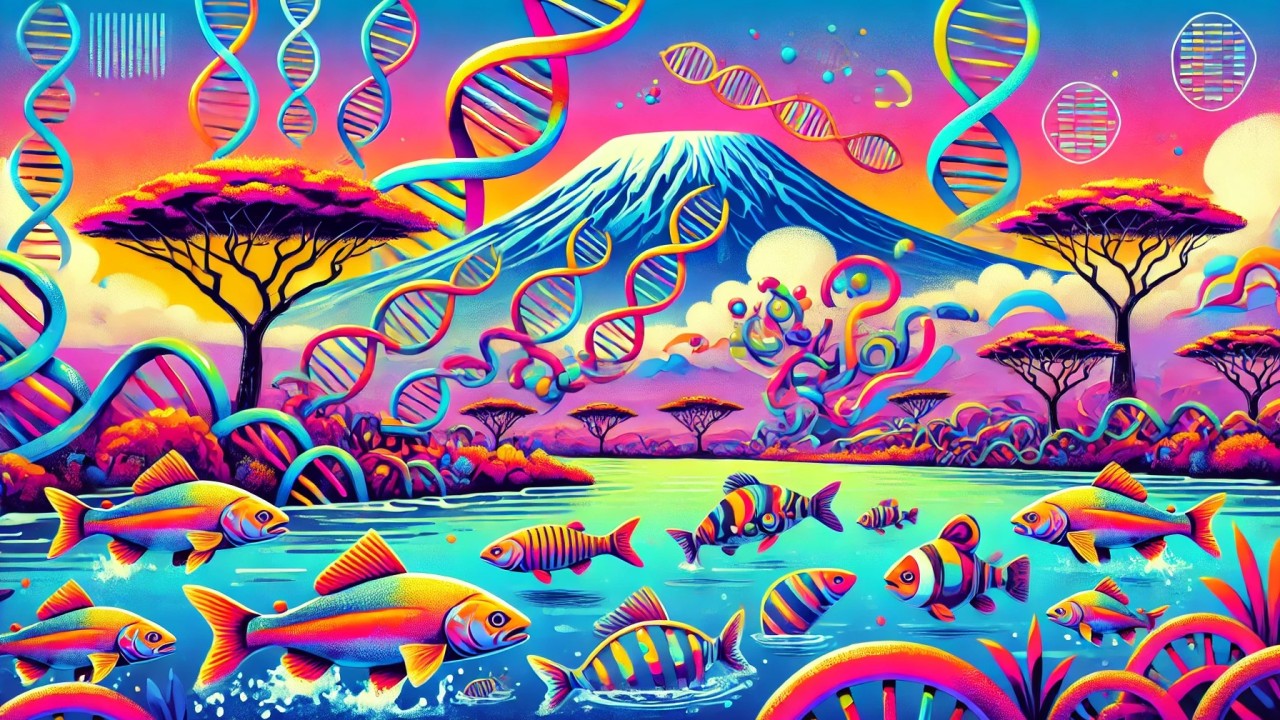
Tropical freshwater ecosystems are some of the most diverse and vital ecosystems on Earth, boasting rich biodiversity that sustains countless species. Understanding the complexity of these systems, especially in vast and less explored regions like those in East Africa, has historically been a challenging task. However, breakthroughs in DNA metabarcoding technology are revolutionising how we survey and manage biodiversity, providing unprecedented clarity on species distributions and enabling more effective conservation efforts.
One compelling application of this technology has been in the Rufiji River catchment in central Tanzania. Tanzania, located in East Africa, is known for its stunning landscapes, rich wildlife, and diverse cultures. It is home to iconic natural landmarks like Mount Kilimanjaro and Serengeti National Park. Tanzania’s vast wilderness, including coastal areas and islands like Zanzibar, makes it a hub for biodiversity and tourism.
The Rufiji River, the largest river in Tanzania, flows over 600 kilometres from its origins in the Southern Highlands to the Indian Ocean. It is crucial for both the ecology and economy of the region, supporting agriculture, fishing, and wildlife, including large populations of hippos and crocodiles. The river also plays a key role in the Selous Game Reserve, a UNESCO World Heritage site, providing water for one of Africa’s largest protected areas. The Rufiji River system, including the Ruaha and Kilombero tributaries, is known for its high fish diversity. Management, conservation, and sustainable use of these aquatic resources require precise and reliable data on what species are present and where they are located.
A study conducted by researchers from the Tanzania Fisheries Research Institute (TAFIRI), the University of Bristol, the Natural History Museum in London, the University of Hull, and Bangor University employed environmental DNA (eDNA) metabarcoding to map this diversity.
How eDNA Metabarcoding Works
Imagine being able to take a snapshot of an entire ecosystem using just a bottle of water. That is the magic of eDNA metabarcoding. This innovative technique involves collecting water samples from various points across a river system. These samples contain microscopic traces of DNA that fish and other aquatic organisms shed into their environment. By isolating and sequencing this DNA, researchers can detect the species present in the ecosystem without ever seeing them. It is like leaving a trail of breadcrumbs for scientists to follow.
Development of the Custom Reference Library
One of the crucial factors for the success of eDNA metabarcoding is the quality of the reference library used for identifying DNA sequences. To overcome this hurdle, the researchers developed a bespoke reference library. The library was constructed using DNA samples (primarily fin tissue) collected from reference specimens. For sequencing, the researchers employed the mitochondrial 12S ribosomal RNA gene markers, which are well-suited for species-level identification across a broad range of fish taxa. In total, the reference library contained 198 newly sequenced individuals from 66 species from the Rufiji–Ruaha–Kilombero, or proximate catchments. Beyond the newly sequenced individuals, the reference library was augmented with sequences sourced from public databases. Specifically, data were included from nine additional fish species available in the NCBI Sequence Read Archive, and further sequences were retrieved from the NCBI nucleotide database using the meta-fish-lib pipeline. During the eDNA metabarcoding analysis, the custom reference library enabled researchers to confidently assign a high proportion of reads to specific fish taxa. This resulted in the successful identification of 66 fish species across the sampled locations, representing 73% of the species estimated to inhabit the Rufiji River system. This effective use of a robust reference library underscores the library’s essential role in the accurate and comprehensive assessment of fish diversity via eDNA metabarcoding.
Biodiversity Patterns and Environmental Gradients
The surveyed areas revealed that different types of habitats support distinct fish communities. For example, high-elevation streams were found to have a unique assemblage of small-bodied fish species adapted to cool, fast-flowing waters, whereas lower-elevation rivers and floodplains supported larger species and a different mix of migratory and resident fish.
The study found that environmental gradients such as elevation, water temperature, and turbidity play significant roles in shaping fish communities in the Rufiji River system. Higher elevation areas tended to have cooler temperatures, higher dissolved oxygen levels, and clearer waters, which are favourable conditions for certain species like small-bodied mountain catfish (Amphilius sp., Chiloglanis sp.), cyprinoids (Enteromius kerstenii, Opsaridium loveridgii), and spiny eels (Mastacembelus frenatus). In contrast, low-elevation areas with warmer temperatures, lower dissolved oxygen, higher conductivity, and higher turbidity supported different species, including larger catfish (Synodontis sp.), distichodontids (Distichodus petersii), and alestids (Brachyalestes sp.).
These findings demonstrate the pronounced influence of environmental gradients on fish community structure and biodiversity patterns in tropical freshwater ecosystems like the Rufiji River. Understanding these patterns and gradients is crucial for effective management and conservation of these rich but vulnerable ecosystems.
Conservation, Management Implications and Future Directions
The implications of this study extend beyond just understanding species distributions. By utilising eDNA metabarcoding, researchers can pinpoint vulnerable species and regions that require conservation attention. For example, dam construction and agricultural intensification are known stressors in the Rufiji catchment. Identifying core habitats of rare or threatened species, such as migratory eels, allows for more nuanced and effective conservation measures.
Particularly noteworthy is the construction of the Julius Nyerere Hydropower Station across Stiegler’s Gorge within the Nyerere National Park. The study’s data on the distribution of catadromous eels, which need to migrate to the ocean to reproduce, can inform mitigation measures to ensure the survival of these species despite infrastructural development.
Further, the integration of eDNA metabarcoding with traditional sampling methods can offer a comprehensive approach to biodiversity monitoring. Traditional methods can provide physical specimens necessary for detailed taxonomic studies and enhance reference libraries, while eDNA offers broad, rapid assessments of biodiversity. The application of eDNA metabarcoding in East Africa’s Rufiji River system underscores the technology’s potential to revolutionise biodiversity monitoring and conservation. By providing accurate, comprehensive data on species distributions, eDNA can inform conservation strategies and guide environmental management, ensuring that the rich biodiversity of tropical freshwater systems is preserved for future generations.
Leave a Reply