Contamination in urban freshwater systems by faeces poses a longstanding risk to public health, compromising water quality and the sustainability of recreational sites such as beaches and rivers. Traditional monitoring methods that measure faecal indicator bacteria, including E. coli and Enterococcus, reveal water quality status but cannot conclusively identify contamination sources. A recent study underscores the potential of environmental DNA (eDNA) metabarcoding to bridge this gap. By combining eDNA metabarcoding with microbial source tracking (MST), researchers gained a fuller picture of contamination sources, demonstrating how this approach can inform both public health and One Health strategies.
Innovating Feacal Source Tracking with eDNA Metabarcoding
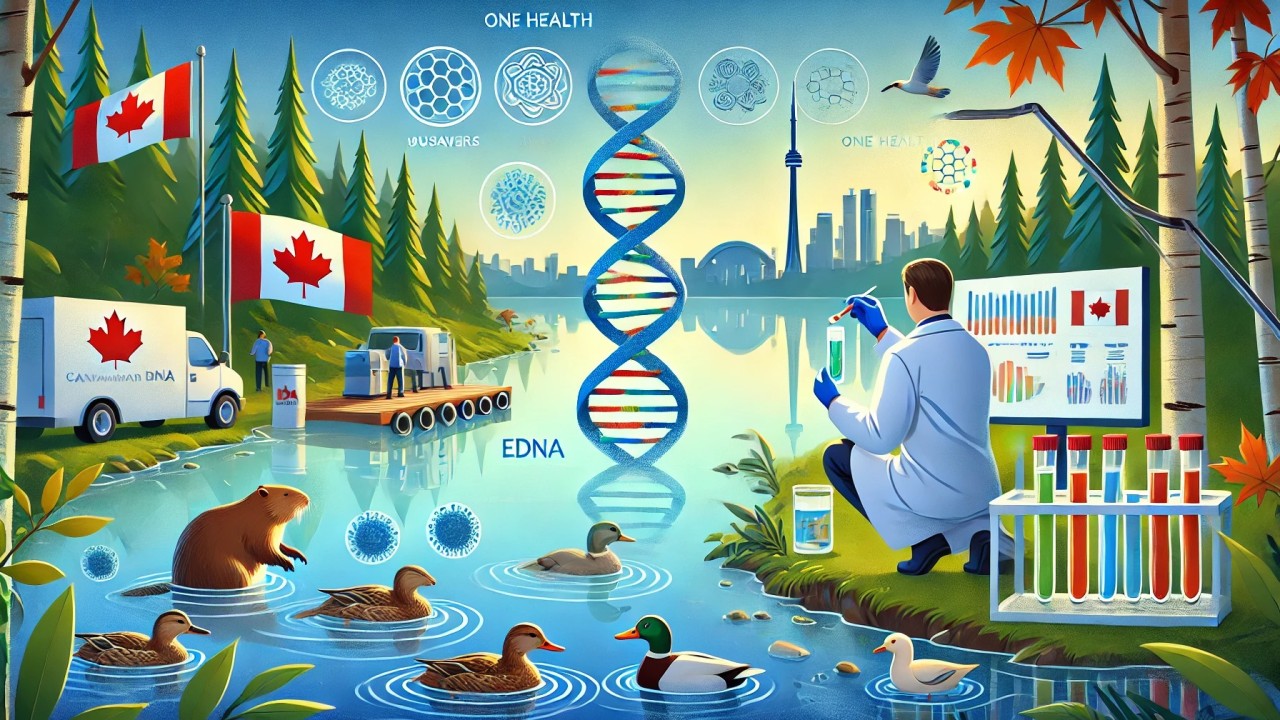
Environmental DNA, or eDNA, consists of genetic material released by organisms through skin cells, faeces, and other biological matter. Conventional MST relies on detecting specific DNA markers one at a time, each tailored to a particular host. eDNA metabarcoding, however, uses next-generation sequencing to identify universal markers—often mitochondrial genes—across multiple species simultaneously. This method broadens the search for potential pollution sources and speeds up analysis in urban water systems. In the Canadian study, researchers focused on four Lake Ontario beaches and nearby rivers, applying both eDNA metabarcoding and digital PCR-based MST.
Methodology: Integrating eDNA Metabarcoding and MST
Water and sand samples were taken from four Lake Ontario beaches and two river mouth sites throughout the bathing season, capturing a range of environmental conditions. DNA was extracted using standard protocols and then analysed through eDNA metabarcoding with the mitochondrial 16S rRNA gene to identify mammalian and avian taxa. Next-generation sequencing generated large datasets subsequently processed via bioinformatics pipelines, linking taxonomic identities to sources such as humans, beavers, muskrats, mallard ducks, and gulls. Data normalisation ensured a balanced representation of species across samples.
Alongside eDNA metabarcoding, digital PCR targeted specific markers for human (HF183 Bacteroides) and bird-derived (Gull4) contamination. Given the frequent detection of human DNA in sewage-impacted sites, PCR-blocking methods were explored to reduce human DNA amplification, making it easier to detect animal-derived eDNA. The team also included markers for cattle, pigs, and chickens to investigate possible contamination from undigested food in human sewage. Results from the metabarcoding and MST analyses were then merged, creating a detailed picture of faecal pollution sources and clarifying how much contamination stemmed from sewage versus wildlife.
Key Findings: A Comprehensive View of Faecal Pollution
The study showed that eDNA metabarcoding successfully pinpointed a broad range of faecal contamination sources in water and sand at urban beaches and rivers. Human eDNA dominated most sites, reflecting ongoing wastewater inputs. Wild species, including beavers, muskrats, mallard ducks, and gulls, were also widespread contributors to faecal pollution. These discoveries underscored the multifaceted nature of contamination in urban areas.
By allowing researchers to detect multiple organisms in a single test, eDNA metabarcoding surpassed conventional MST in uncovering a more diverse set of potential polluters. While MST markers target only a few species, eDNA’s reliance on universal genetic regions provided a richer tapestry of mammalian and avian diversity. Mitochondrial 16S rRNA sequencing, for instance, enabled the simultaneous identification of numerous species from each sample, enhancing overall ecosystem understanding.
Human Contamination Indicators and Other Surprises
Notably, the high volume of human eDNA in sewage-impacted sites made it difficult to differentiate between different intensities of human contamination. In these instances, the HF183 marker proved more accurate for identifying human faecal hotspots. This discrepancy emphasises the need to use both MST and eDNA metabarcoding for precise source attribution.
Another unexpected finding was the frequent detection of chicken and cow DNA, likely originating from food remnants in human sewage rather than direct animal faecal inputs. This underscores the complexity of eDNA data in urban settings, where diet-related DNA can create confusion around actual contamination sources.
By blending eDNA metabarcoding with MST, the researchers achieved a more nuanced portrayal of faecal pollution. eDNA offered extensive biodiversity information, while MST delivered high specificity for key contributors like humans and gulls. This synthesis enabled better distinctions between sewage-derived and wildlife-driven contamination, providing clearer targets for public health interventions.
Public Health and One Health Implications
A notable advantage of this two-pronged approach is its direct relevance to public health and One Health objectives. Faecal pollution can spread waterborne diseases, foster antimicrobial resistance, and harm ecosystems. For instance, beavers and muskrats identified by eDNA often harbour Giardia and Cryptosporidium, both of which can cause gastrointestinal illness in humans. Traditional bacterial indicators do not always align with these pathogens, making advanced detection methods essential for preventive strategies.
Better identification of avian pollution, such as gull droppings, could guide site-specific measures like habitat alterations to limit faecal entry into recreational waters. The One Health aspect is evident in the detection of urban mammals like raccoons and foxes, which inhabit the human-animal boundary and can transmit zoonotic diseases. Integrating these insights allows health authorities to devise interventions that protect people, wildlife, and the environment.
Challenges and Future Directions
Despite promising outcomes, certain obstacles remain. The overabundance of human eDNA in sewage-heavy areas impedes the ability to assess lesser sources, suggesting a need for improved PCR-blocking methods. Additionally, while eDNA metabarcoding captures a broad range of species, it lacks the pinpoint accuracy of MST. Consequently, practitioners should use a combined approach for the best results.
Another open question is the longevity and decay rate of eDNA in different conditions. Mitochondrial DNA may persist longer than bacterial markers, potentially skewing interpretations of contamination timing or severity. Overcoming these limitations is crucial for fully harnessing eDNA’s capabilities.
Translating Innovation into Practical Action
The main value of this new methodology lies in its potential for real-world impact. In areas heavily influenced by wastewater, conventional monitoring can be inconclusive, but a mix of eDNA metabarcoding and MST can offer clearer insights. With scalable technologies, local authorities and resource-limited agencies could adopt these methods for detailed contamination mapping, guiding interventions that suit each site’s specific challenges.
Public health programmes could benefit from quicker pathogen detection, while environmental agencies might use these findings to balance recreational interests with habitat conservation. Whether the goal is safeguarding human health, preserving urban wildlife, or restoring natural ecosystems, eDNA-based techniques could serve as a foundation for more strategic water management.
Overall, the fusion of eDNA metabarcoding with MST raises the bar for faecal source tracking. By capturing a wider suite of organisms and honing in on critical indicators, researchers and policymakers can gain a deeper understanding of contamination patterns. This holistic perspective aligns with One Health principles, reflecting a world in which human, animal, and environmental health are intricately connected. If further optimised, this integrated framework could become a powerful tool for safeguarding public health, preserving ecosystems, and informing evidence-based decision-making.
Moving forward, broader deployment of eDNA metabarcoding across varied geographic regions could refine our understanding of faecal pollution patterns and their evolution over time. Long-term, routine sampling might reveal seasonal shifts in contamination sources or pinpoint emerging threats, such as novel pathogens or antibiotic-resistant microbes. Moreover, integrating eDNA findings with data from land-use surveys, wildlife population studies, and climate models could illuminate the complex factors driving pollution hotspots. As urban populations continue to expand, safeguarding water resources will require adaptive strategies that span sectors and disciplines, reflecting the essence of One Health collaboration. With each advance in eDNA technology, the gap between scientific discovery and practical application narrows, promising solutions that benefit human well-being, protect wildlife habitats, and preserve the integrity of our shared environment. Ultimately, eDNA stands as an evolving frontier in modern environmental stewardship.
Leave a Reply