
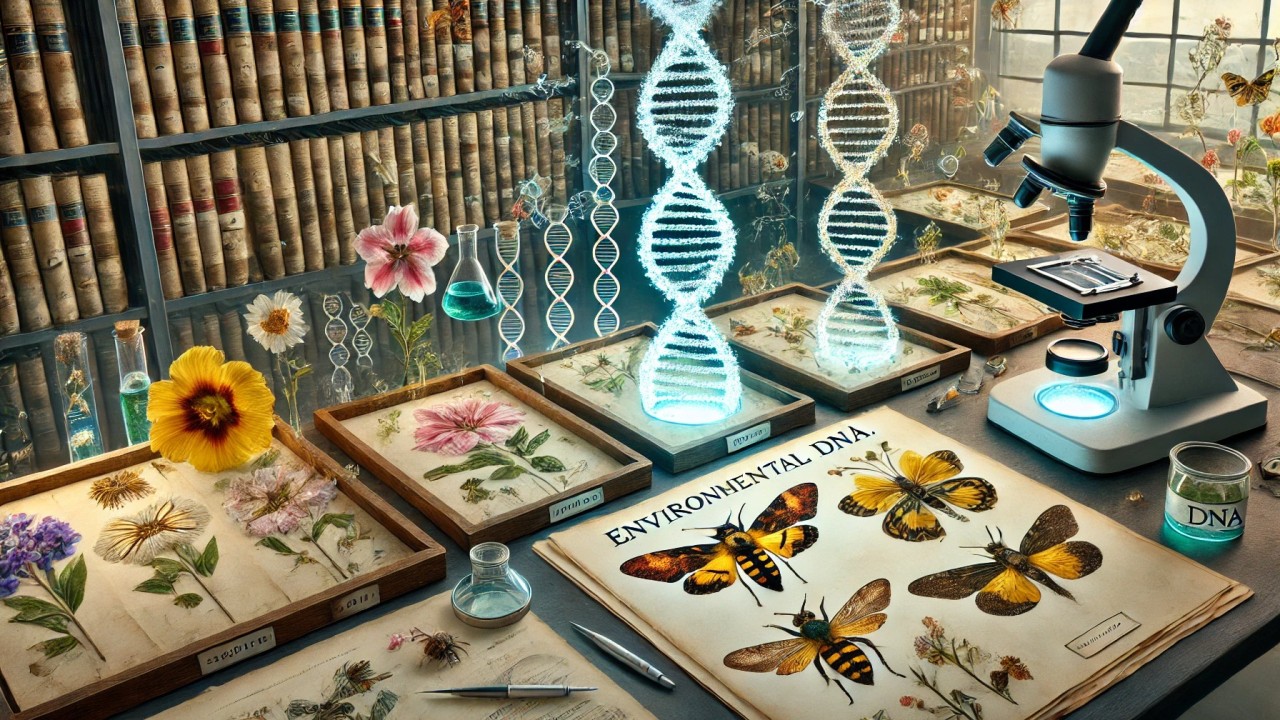
Natural history collections have long served as invaluable archives of our planet’s biological heritage. In recent years, technological breakthroughs in environmental DNA (eDNA) analysis have opened up new pathways for exploring the interactions between plants and their animal visitors. By retrieving genetic material remaining on preserved flowers, researchers are now able to infer historical ecological relationships that help illuminate patterns of pollination, herbivory, and mutualisms across decades. This innovative approach not only deepens our understanding of past biodiversity but also offers crucial insights for contemporary conservation efforts.
Why eDNA from Herbarium Specimens Matters
With global environmental change and declining pollinator populations marking our current era, understanding historical plant–animal interactions are essential not only for retrospective research but also for guiding future biodiversity conservation and restoration strategies. Herbarium specimens, traditionally valued for their contributions to taxonomy, biogeography, and evolutionary biology, are now being used to reveal hidden interactions between plants and animals. A recent study from USA-based researchers shows how careful analyses of eDNA derived from these preserved materials can provide a historical snapshot of ecological dynamics.
The researchers designed their study to address a series of important questions:
1. Is it possible to extract and identify high-quality eDNA from animal visitors preserved on herbarium specimens?
2. How does the age of a herbarium specimen affect the recovery of usable eDNA?
3. How do the floral visitor communities detected on preserved specimens compare with those obtained from fresh samples?
By focusing on these questions, they sought to validate herbarium specimens as a novel resource for historical ecological research.
Innovative Methods: Harnessing the Power of eDNA
The cornerstone of this research lies in the innovative use of eDNA extracted from both herbarium specimens and fresh flower samples. The researchers employed a modified DNA isolation protocol specifically designed to maximise the recovery of genetic material from preserved flowers.
This process involved the careful removal of fully open, intact flowers from herbarium sheets—a practice that, although destructive, is justified by the potential scientific yield. A key element of the methodology was the inclusion of samples spanning a wide range of specimen ages—from freshly collected flowers to herbarium specimens that were up to 69 years old. By comparing eDNA read counts between these samples with controlled parameters, the researchers were able to assess the impact of specimen age on DNA recovery, an insight of great relevance for studies relying on archival materials.
The researchers amplified the extracted eDNA using primers targeting two key genetic markers: cytochrome c oxidase subunit I (COI) and the 16S ribosomal RNA gene. The use of both markers increased the probability of detecting a broad spectrum of animal taxa, including insects, birds, and small “intra‐floral” organisms. The amplified DNA fragments were then sequenced using high-throughput Illumina platforms, generating millions of sequence reads that were bioinformatically processed and matched to reference databases. This pipeline ensured the identification of operational taxonomic units (OTUs) corresponding to various animal clades.
Key Findings and Their Implications
The study successfully demonstrated that eDNA from floral visitors can be extracted, amplified, and identified from dried herbarium specimens. Over 1.5 million sequences of animal taxa were detected, belonging to 30 major clades, including beetles, moths, thrips, and even hummingbirds.
Remarkably, eDNA was retrieved from specimens as old as 69 years. For example, a 51-year-old Hypericum frondosum specimen contained detectable eDNA from ruby-throated hummingbirds (Archilochus colubris), and a 69-year-old Physaria globosa specimen retained traces of thrips.
The age of herbarium specimens had a negligible impact on the quantity of target eDNA extracted. While fresh material offered up to ten times more eDNA reads on average compared to herbarium samples (52,873 vs. 5,546 reads per sample), linear regression models revealed no significant loss of usable eDNA from older herbarium specimens. This finding underscores the potential longevity and conservation value of eDNA preserved in herbaria.
Herbarium specimens provided eDNA evidence for a broad range of floral visitor taxa similar to those found in fresh samples, though certain underrepresented groups (e.g., bees) were less detectable using herbarium materials. Underrepresentation of bees (e.g., carpenter bees) may stem from their grooming behaviours, which reduce the deposition of DNA-containing material or potential primer biases in eDNA amplification protocols.
A further layer of analysis involved statistical modelling of the relationship between the age of a specimen and the number of detectable DNA sequence reads. The researchers applied linear regression models separately for data derived from the COI and 16S markers. The slopes of these models, although showing a slight negative trend, were statistically insignificant, suggesting that the overall degradation of eDNA in herbarium specimens over time does not drastically hinder the detection of plant–animal interactions. This is a particularly encouraging result for the field, as it confirms that legacy collections can be reliably used for modern genetic analyses.
Challenges Revealed and Considerations for Future Research
While the study revealed the promise of herbarium specimen eDNA as a resource, it also highlighted some challenges and potential limitations. One noted obstacle is the possibility of contamination resulting from handling and storage, as well as the over- or under-representation of certain taxa based on their inherent biological characteristics. For instance, organisms that are more likely to shed DNA—such as lepidopterans, which leave behind wing scales—were over-represented in the sequencing data. Conversely, taxa that groom themselves vigorously, like many bee species, were often detected at lower rates.
Another challenge related to sample collection is the unpredictable nature of eDNA presence on herbarium specimens. Unlike fresh samples, where conditions such as temperature, precipitation, and time of day can be optimised to maximise DNA yield, herbarium specimens do not come with such environmental metadata. As a result, some specimens may fail to produce usable eDNA entirely, necessitating the sampling of multiple flowers from different parts of the same specimen to improve the chances of recovery.
Despite these challenges, the study emphasises that advancements in both laboratory protocols and bioinformatics tools have the potential to refine eDNA metabarcoding techniques further. Future methodological improvements may mitigate issues of primer efficiency and differential shedding, thereby enhancing the comparability of data obtained from both fresh and archived specimens.
The Road Ahead
Scientists have long valued herbarium specimens—pressed, dried plant collections—as invaluable records of the natural world. Herbarium specimens now stand as critical reservoirs of historical ecological data, essential for understanding changes in biodiversity over time. As digitisation efforts make these collections globally accessible, researchers worldwide gain a powerful resource to study long-term ecological trends, assess the impacts of climate change, and develop targeted conservation strategies.
Methodological advances open a compelling new chapter in ecological research. Successfully extracting animal DNA from historical plant specimens allows researchers to explore questions previously thought impossible. How have pollinator communities evolved over decades or centuries? How have environmental changes reshaped plant-pollinator interactions? These questions are increasingly relevant in an age of rapid biodiversity loss and environmental upheaval.
Improving DNA extraction protocols and refining computational tools will help mitigate issues such as inconsistent primer efficiency—DNA markers that help identify species—and the varied ability of different organisms to shed DNA. Such developments will allow scientists to produce more accurate and comparable data from both fresh and historical samples.
Looking forward, future research must focus on expanding DNA reference databases to enhance species identification accuracy and further refine laboratory methods for improved eDNA recovery. Researchers should also integrate genetic insights with historical observations to create comprehensive ecological models capable of tracking subtle and significant shifts in species interactions.
Ultimately, the integration of eDNA technology with traditional herbarium collections represents more than scientific curiosity—it is a groundbreaking approach with real-world implications. By decoding the genetic messages locked within old plant specimens, scientists can better understand the resilience and vulnerability of ecosystems, guiding informed conservation actions to protect biodiversity today and into the future.
Leave a Reply