
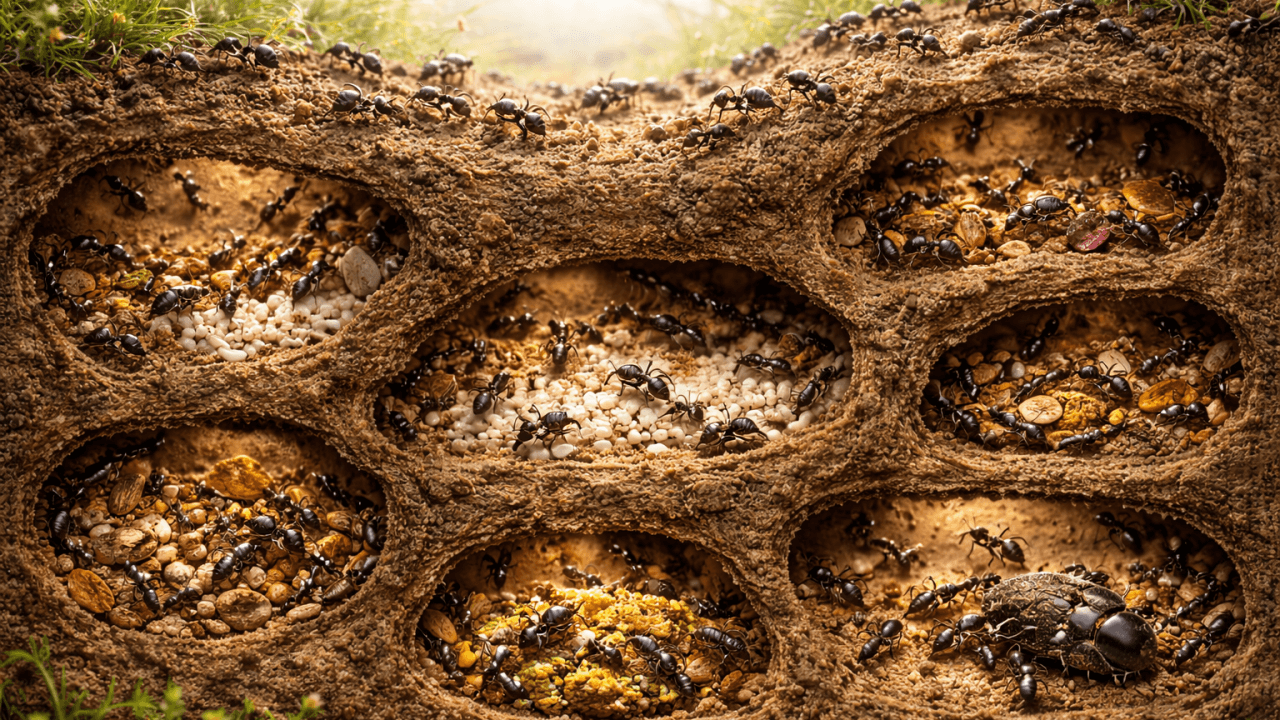
On a long train journey from a conference, I spotted a single ant crawling across the table. Instinctively, I flicked it away, much to the chagrin of my travel partner, who had been watching it for some time, entertained by its foraging behaviour. That flick brought me bad karma, as I went on to forget my luggage on the train! The single ant stood no chance against me; however, I have been on the receiving end of ants. In a study in Ghana, we tested the potential of using light traps housed in a sticky, triangular-shaped trap to attract and capture flying pests.
Picture this: a square plot of land with lamps at each corner, each casting a different colour—blue, red, white, and UV. Moths are attracted to light, and this setup was designed to determine the most effective light spectrum for attracting them. From a scientific standpoint, the system was sound. What we had not accounted for were the ants. When you see a single ant near a light trap, you think nothing of it. It registers as background noise, an incidental presence in a system built for something larger, something winged, something visible.
Overnight, the ants figured that the traps with the trapped insects offered easy, stationary, concentrated food. A communication signal was transmitted, and, by sheer teamwork and coordination, they overcame the sticky trap surface. By morning, they had stripped the traps clean. And what’s more, it was not a single ant in play this time, like the one on the train. This time, the ants had strength in numbers, defending, stripping the stuck insects away, holding us at bay. We had to laugh in frustration and with grudging respect; they were small but mighty.
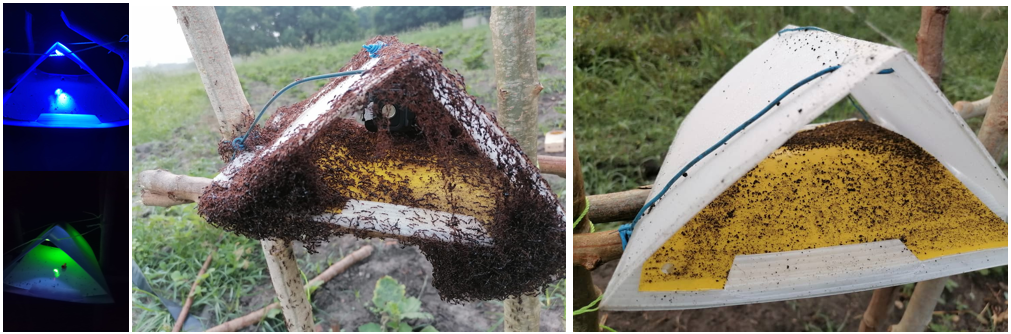
Our light-trap set-up at night was overrun by ants, which completely cleaned out the traps, leaving behind soil particles; this is likely how they overcame the yellow sticky surface. Photos: Francis Wamonje
Here’s the catch: no single ant performs a glamorous, heroic task; instead, they divide the entire action into countless microtasks, move organically, and execute. An ant, on its own, is almost nothing, easily ignored and dismissed. Yet when ants work together, they move objects larger than themselves, build underground cities, and quietly reshape entire landscapes.
This is the power of microtasks.
A microtask is a small, clearly defined unit of work that can be completed without heroics, prolonged effort, or excessive authority, yet, when repeated and shared, contributes to outcomes far larger than itself. In human systems, microtasks are the building blocks of progress. They are the everyday actions that sustain organisations, communities, and societies, even though they rarely attract attention. Answering an email thoughtfully. Recording an observation accurately. Showing up on time. Cleaning a shared space. Passing information along reliably. None of these actions changes the world on its own, but together they do.
Microtasks work because they respect human limits. They recognise that people have finite energy, attention, and time. Rather than demanding constant excellence or continuous urgency, microtasks invite consistency. They lower the barrier to participation and increase the likelihood of completion.
Like ants in a colony, humans function best when responsibility is distributed, effort is shared, and progress is cumulative. Microtasks allow individuals to contribute meaningfully without being overwhelmed and enable systems to move forward without relying on a few exhausted heroes.
The ant is one of the insects I write about in my recent book ‘The Kingdom of Small Things’ To learn more about the simple yet powerful lesson of the ant, pick up a copy, now available on Amazon and on Kindle.
Leave a Reply