
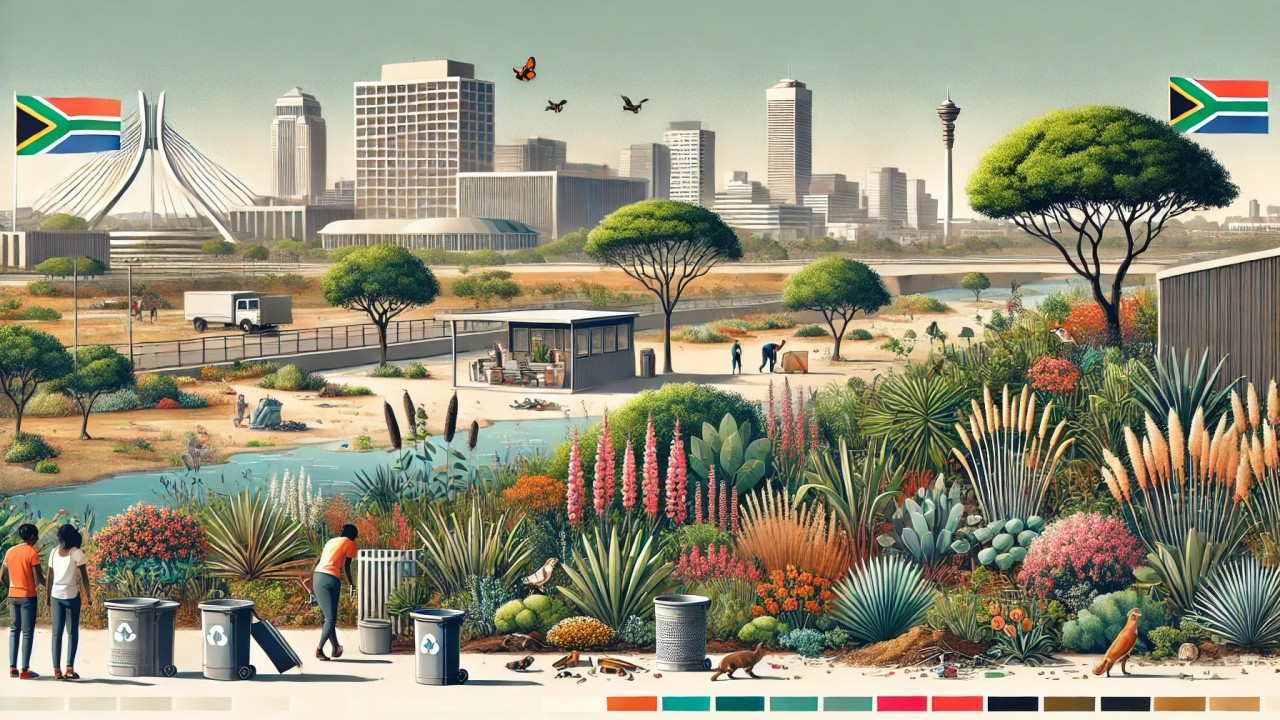
As cities around the world grow at unprecedented rates, the importance of urban green spaces is becoming more apparent, particularly for biodiversity conservation. This is especially significant in rapidly urbanising regions of the Global South, where the balance between development and preserving natural environments presents both challenges and opportunities. South Africa, a relatively advanced nation in many respects, is no exception. Situated at the southern tip of the African continent, South Africa is known for its rich cultural diversity, complex history, and stunning natural landscapes. With a multicultural population speaking 11 official languages and three capital cities—Pretoria (executive), Bloemfontein (judicial), and Cape Town (legislative)—South Africa exemplifies a country that is both modern and rooted in diverse traditions.
The City of Tshwane, which encompasses Pretoria, is one of South Africa’s largest metropolitan areas. Located in Gauteng province, Tshwane serves as the administrative capital of the country and is home to numerous government offices, foreign embassies, and prestigious academic institutions. The city is a blend of historical sites, such as the Union Buildings, and modern urban development, positioning it as an important hub for research and higher education. Recent studies in Tshwane have brought to light the multifaceted benefits of unmanaged urban green spaces, which not only contribute to biodiversity but also offer substantial value to local communities.
The Ecological Value of Unmanaged Urban Green Spaces
Unmanaged urban green spaces are critical habitats for biodiversity, acting as dispersal corridors that link larger habitat patches both within and outside cities. Research conducted in Tshwane utilised a mixed-methods approach, combining vegetation surveys and community assessments with rapid evaluations of multifunctional benefits. This approach provided a holistic understanding of both the natural and social dimensions of these green spaces. The vegetation surveys revealed that these unmanaged spaces are biologically diverse, with a wide array of plant species that contribute to ecosystem functionality. For example, in Atteridgeville, researchers identified 169 plant species spanning 47 plant families and 124 genera. Of these, 103 were forbs (61%), 40 were graminoids (grasses and sedges, 24%), and 26 were woody species (trees and shrubs, 15%). Similarly, in Mabopane, 184 plant species were recorded, representing 52 plant families and 148 genera. This included 84 forbs (46%), 41 graminoids (22%), and 59 woody species (32%).
Biodiversity Value and Protected Species
While no Red Data-listed threatened species were recorded in the study areas, these sites proved to be important habitats for regionally protected plant species. Six protected plant species were found in Mabopane and five in Atteridgeville, underscoring the role that unmanaged urban green spaces can play in conserving species of concern, even in highly urbanised environments.
Moreover, these green spaces provide crucial habitats for a variety of species beneficial to urban ecosystems. In Mabopane, 28 plant species known to support butterflies and birds were identified, while Atteridgeville hosted 11 such species. This highlights the potential of these spaces to support urban wildlife and contribute to overall ecosystem health.
Threats to Ecological Integrity
Despite their ecological value, urban green spaces in Tshwane face significant threats. Fifteen invasive plant species were recorded in Mabopane and 16 in Atteridgeville. Invasive species pose a major risk to native biodiversity, as they can outcompete or otherwise negatively impact indigenous species, leading to localised extinctions. This threat is further exacerbated by habitat loss and the effects of climate change, creating a complex set of challenges for urban biodiversity conservation efforts.
Human activities also threaten these green spaces. Illegal waste dumping, informal housing developments, and pollution are degrading their ecological integrity. For instance, an estimated 29% of domestic waste is not collected as part of municipal services, leading to waste accumulation in unmanaged green spaces. This not only diminishes the visual appeal and ecological function of these areas but also poses risks to human health and well-being, further jeopardising the biodiversity they support.
Ecological Dynamics and Restoration Potential
Parts of the study sites have been ecologically degraded by pollution and illegal waste dumping and are at risk of being overtaken by invasive shrubs and trees. In such cases, overgrowth signals an unbalanced ecosystem lacking crucial dynamics such as fire and grazing, both of which are essential to maintaining the health of savanna systems. The research suggests that active management, including ecological restoration, could significantly improve the health and biodiversity of these spaces.
While the presence of invasive species is a concern, it also presents an opportunity for ecological restoration. Removing invasive plants and restoring native vegetation could enhance biodiversity and improve overall ecosystem functioning. Additionally, reintroducing ecological dynamics such as controlled burns or grazing could help maintain a balanced savanna ecosystem, ensuring that these urban green spaces remain healthy and resilient.
Multifunctionality and Ecological Benefits
The multifunctionality assessment conducted in this study revealed that both sites have untapped potential to enhance their biodiversity and overall benefit provision. The assessment rated both sites as providing “some degree” of the right space and quality for biodiversity, indicating that with proper management and restoration efforts, these urban green spaces could greatly enhance their ecological value.
Spatial analysis of the benefits showed heterogeneity across the landscape, with some areas offering multiple ecosystem services while others provided relatively few. This spatial variability presents an opportunity for targeted interventions to boost biodiversity in underperforming areas, while also protecting and enhancing areas of high ecological sensitivity.
Balancing Ecology and Community Needs
While the ecological value of these urban green spaces is clear, the study also identified potential conflicts between biodiversity conservation and community needs. For instance, many residents expressed a preference for open, ornamental vegetation, which may not align with the ecological needs of native species. However, the preference for open spaces is consistent with the natural state of these areas, which contain a mix of shrubland and grassland ecosystems.
The challenge lies in balancing these community preferences with the need to protect and enhance native biodiversity. Engaging local communities in the management of green spaces could lead to synergistic outcomes, where both ecological and social values are enhanced. Environmental education initiatives could foster greater appreciation for native species, while co-management efforts could encourage local participation in conservation activities, ensuring that green spaces continue to meet both ecological and community needs.
Conclusion: Urban Green Spaces are Essential for Biodiversity
The findings from Tshwane underscore the importance of urban green spaces as biodiversity hotspots within the urban matrix. These areas provide essential ecosystem services and serve as critical refuges for a diverse range of plant and animal species. The research highlights the urgency of adopting collaborative, transdisciplinary approaches to the management and design of urban green spaces, ensuring their ecological integrity is preserved amidst the pressures of urbanisation.
By prioritising ecological considerations in urban planning and fostering community involvement, cities like Tshwane can enhance the resilience of their green spaces. This will ensure they continue to provide critical habitats and ecosystem services while enriching the lives of urban residents. As urban areas expand, the lessons from Tshwane offer a valuable blueprint for integrating biodiversity conservation into urban development, contributing to the creation of more sustainable and liveable cities.
Leave a Reply