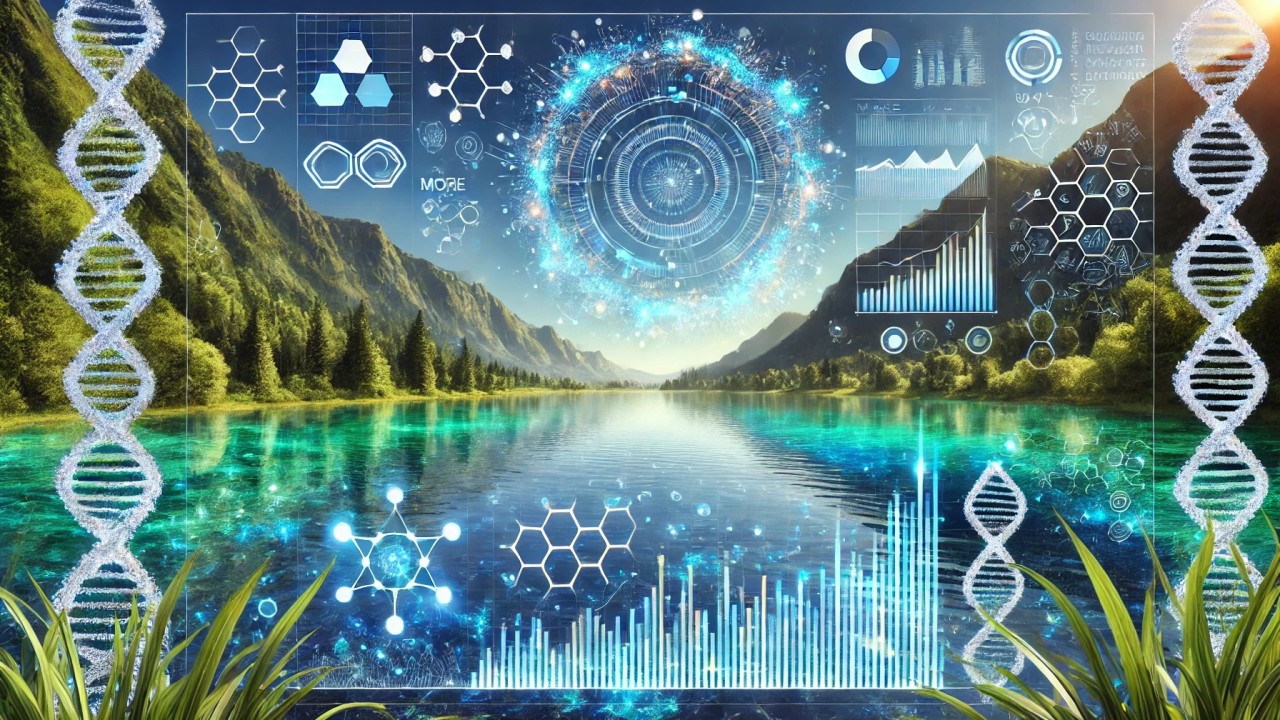
In today’s world, where freshwater scarcity is becoming an increasingly pressing issue, ensuring a reliable supply of clean drinking water is more crucial than ever. Water companies face numerous challenges, including pollution, climate change, and the rise of compounds that degrade water quality. Among these, Taste and Odour (T&O) problems have emerged as a significant global concern. However, as shown in a recent study, innovative solutions like environmental DNA (eDNA) analysis and interactive data dashboards are revolutionising water management, offering sustainable and efficient ways to monitor and maintain water quality.
Maintaining Water Quality in a Changing World
Freshwater is one of our most vital resources, yet it is under constant threat from various environmental stressors. Pollution from industrial activities, agricultural runoff, and residential waste introduces harmful substances into water sources. Climate change exacerbates these issues by altering precipitation patterns, increasing temperatures, and causing extreme weather events that can disrupt water supply and quality. Additionally, the influx of nutrients like nitrogen and phosphorus can lead to the growth of harmful algal blooms, which produce unpleasant tastes and odours in drinking water, commonly referred to as T&O events.
T&O events are particularly problematic because they affect water palatability, leading to consumer dissatisfaction and significant financial costs for water companies. Traditional monitoring methods, such as cell counts and microscopy, are time-consuming and often fail to provide a comprehensive picture of microbial diversity. This reactive approach limits the ability of water companies to proactively manage and prevent T&O issues, resulting in frequent disruptions and increased operational costs.
Harnessing the Power of eDNA
Environmental DNA (eDNA) analysis has emerged as a game-changer in water quality management. Unlike traditional methods, eDNA utilises high-throughput sequencing techniques to detect and monitor bacterial and algal communities in water reservoirs. By targeting specific genes, such as the 16S rRNA gene, eDNA provides a detailed snapshot of microbial diversity and community dynamics in a matter of hours.
This advanced method allows for the identification of hundreds of taxa, including those responsible for T&O events, with remarkable speed and accuracy. By understanding the composition and behaviour of microbial communities, water managers can predict and prevent potential T&O issues before they escalate. This proactive approach not only safeguards water quality but also enhances the sustainability of water supplies by enabling more informed decision-making.
The Power of Dashboards: Simplifying Complex Data
While eDNA generates massive datasets, the true potential of this information is unlocked through the use of interactive dashboards. These platforms, such as those created with Tableau, transform complex genetic and environmental data into visual, easy-to-understand formats. Dashboards enable real-time monitoring, trend analysis, and customisation, allowing water managers to respond swiftly to changing conditions and emerging risks.
Real-Time Monitoring: Staying Ahead of Water Quality Issues
Dashboards provide an at-a-glance view of bacterial populations, nutrient levels, and other key metrics as they evolve in real-time. This capability allows for proactive management, enabling water companies to anticipate and mitigate water quality issues before they escalate into costly and disruptive events.
Trend Analysis: Identifying Patterns for Preventive Action
Visual tools like stacked bar charts and heatmaps embedded in dashboards make it easy to spot trends and patterns, such as the emergence of Cyanobacteria, which are key T&O producers. By identifying these trends early, water managers can adjust treatment protocols and prevent T&O events, ensuring a continuous supply of high-quality drinking water.
Customisation: Tailored Insights for Unique Water Bodies
Dashboards can be customised to focus on specific reservoirs, taxa, or environmental variables, providing actionable insights tailored to the unique characteristics of each water body. This level of customisation ensures that water managers have the most relevant information at their fingertips to make informed decisions.
Case Study: eDNA and Dashboards in Action
The integration of eDNA analysis and interactive dashboards is already making a significant impact within the UK water industry. Several water companies are trialling these methods to enhance their reservoir management practices. By visualising molecular data on dashboards, these companies can track bacterial diversity and assess water quality risks more effectively.
One notable outcome from these trials is the ability to forecast T&O risk by monitoring shifts in bacterial communities. For instance, a decrease in community diversity often signals the dominance of problematic taxa such as Cyanobium and Microcystis, which are critical indicators of impending T&O events. Armed with this knowledge, water managers can adjust nutrient inputs, improve algal control measures, and optimise treatment protocols to prevent T&O issues before they occur.
Building a Sustainable Future: The Path Forward
As global water supplies continue to face stress from climate change and urbanisation, adopting advanced technologies like eDNA and interactive dashboards is essential for building resilient and sustainable water management systems. These tools not only enhance the ability of water companies to monitor and maintain water quality but also contribute to long-term sustainability by reducing operational costs and improving resource management. To successfully integrate eDNA and interactive dashboards into water management practices, water companies should consider the following steps:
1. Invest in Training: Equip reservoir management teams with the necessary skills to interpret eDNA data and effectively use dashboard tools.
2. Develop Partnerships: Collaborate with research institutions and specialised labs to enhance eDNA sampling and analysis capabilities.
3. Customise Dashboards: Tailor dashboard platforms to reflect the unique variables and operational needs of each reservoir, ensuring the data presented is relevant and actionable.
4. Promote Proactive Management: Shift from reactive approaches to preventive strategies by leveraging real-time data insights to anticipate and address water quality issues before they arise.
5. Scale and Adapt: Expand the use of eDNA and dashboarding tools across multiple reservoirs and regions, adapting the methods to different environmental conditions and management requirements.
By taking these steps, water companies can harness the full potential of eDNA and interactive dashboards, leading to more sustainable and efficient water management practices that protect and preserve freshwater resources. For professionals in the water industry, policymakers, and stakeholders, embracing these data-driven solutions is not just an opportunity—it is a necessity. Investing in eDNA technologies and interactive dashboards today will pave the way for better water quality management, reduced operational costs, and enhanced sustainability, ultimately securing the future of our water resources.
Leave a Reply