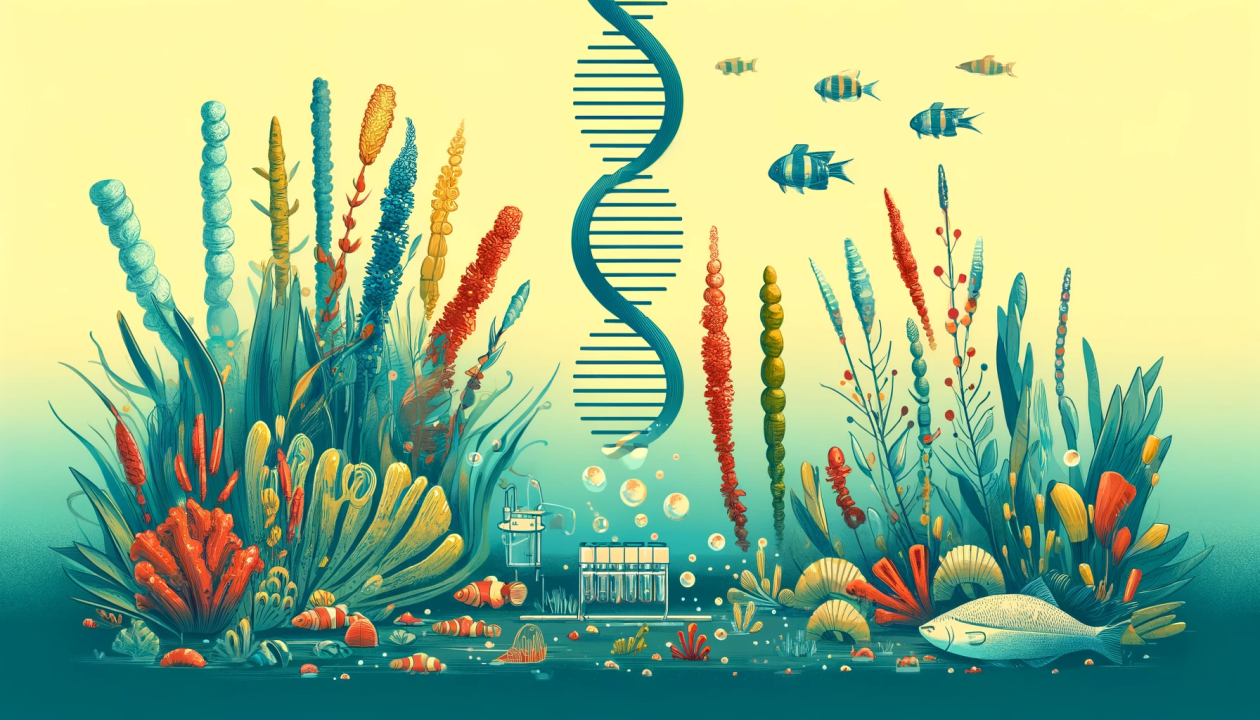
Kelp forest ecosystems, found in cold, nutrient-rich waters, are vital biogenic habitats that support diverse marine biodiversity. These underwater forests, primarily composed of species like Sea bamboo (Ecklonia maxima) and Split-fan kelp (Laminaria pallida), provide vital ecosystem services and act as ecosystem engineers. The Great African Seaforest, stretching from Cape Agulhas in South Africa to Namibia, is one of the world’s most extensive kelp forests. Unlike many global kelp systems that are declining, this seaforest is expanding due to cooling waters. However, it faces increasing threats from climate change and other human activities, necessitating contemporary and comprehensive biodiversity monitoring.
Innovative eDNA Sampling and Analysis
A recent study utilised environmental DNA (eDNA) metabarcoding to assess the biodiversity of these kelp forests within the Great African Seaforest to document and track marine life. eDNA sampling was conducted at Rooiels in the Western Cape, South Africa, which is dominated by bamboo kelp. Over a 24-hour period, water samples were collected every four hours at two depths (1m and 8m) using sterilised bottles. These samples were immediately filtered onshore using filters, which were then preserved with a buffer to maintain the integrity of the DNA captured. In the laboratory, DNA was extracted from the filters using a modified DNeasy Blood and Tissue kit protocol. The extracted DNA was then amplified, targeting both the COI gene and 12S rRNA gene to assess the broad metazoan and specific fish communities, respectively. Sequencing was performed using next-generation sequencing techniques, providing high-resolution data on the species present. This sampling method allowed for the detection of temporal and spatial variations in eDNA signals, offering insights into the biodiversity and community dynamics of the kelp forest ecosystem.
The Biodiversity of the Great African Seaforest
The eDNA metabarcoding analysis revealed remarkable diversity, detecting a total of 880 operational taxonomic units (OTUs) representing various marine organisms, including 75 families. OTUs are used in ecology organisms based on sequence similarity. Simply put, OTUs group together organisms with a high degree of genetic similarity, typically using a threshold such as 97% similarity in their DNA sequences. This allows scientists to estimate the diversity and abundance of different species in a sample without needing to identify each one precisely. Among the findings, 44 fish OTUs across 24 families and 11 species were identified. The study also identified many species from groups like jellyfish (Cnidaria), insects and crustaceans (Arthropoda), sponges (Porifera), segmented worms (Annelida), and molluscs (Mollusca). These species were found in both bottom-dwelling (benthic) and open-water (pelagic) environments. Notably, the authors reported the detection of both common and elusive species, such as the Cape urchin (Parechinus angulosus) and pelagic hydrozoans like Muggiaea.
No significant differences in eDNA signals were found across time and depth, although a trend of higher OTU richness at 8m compared to 1m was noted. This suggests that while eDNA provides a comprehensive snapshot of biodiversity, fine-scale spatial and temporal variations might require more nuanced sampling strategies. Further, multi-primer approaches were crucial in this study, as different primers detected different species, including some not captured by traditional methods.
Implications for Conservation and Advancing Marine Biodiversity Monitoring with eDNA
The application of eDNA metabarcoding in the Great African Seaforest significantly advances marine biodiversity monitoring. This study demonstrates the method’s capability to provide detailed, non-invasive assessments of complex marine ecosystems. eDNA is emerging as a crucial tool with high resolution, enabling researchers to accurately document biodiversity changes and assess the impacts of environmental stressors. It is particularly useful in dynamic environments like kelp forests, where traditional survey techniques are often challenging and disruptive.
The broad taxonomic coverage achieved in this study highlights eDNA metabarcoding’s potential to fill knowledge gaps in understudied ecosystems. By detecting species across various ecological niches and identifying cryptic or elusive taxa, such as polychaete worms and sponges, eDNA metabarcoding uncovers hidden biodiversity. These insights are essential for informing conservation strategies and management practices aimed at preserving vital ecosystems.
Future research should focus on expanding eDNA reference databases. Enhanced barcoding efforts for local species will improve taxonomic resolution and the accuracy of biodiversity assessments. Additionally, integrating eDNA with traditional survey methods, such as visual monitoring and baited remote underwater video (BRUV) surveys, will provide a more comprehensive understanding of marine communities.
Long-term and repeated sampling, combined with analyses of biotic and abiotic factors influencing eDNA persistence and dispersal, will further refine eDNA methodologies. Crucially, understanding the temporal and spatial dynamics of eDNA signals will enhance the ability to monitor changes in biodiversity and ecosystem health over time.
Leave a Reply