
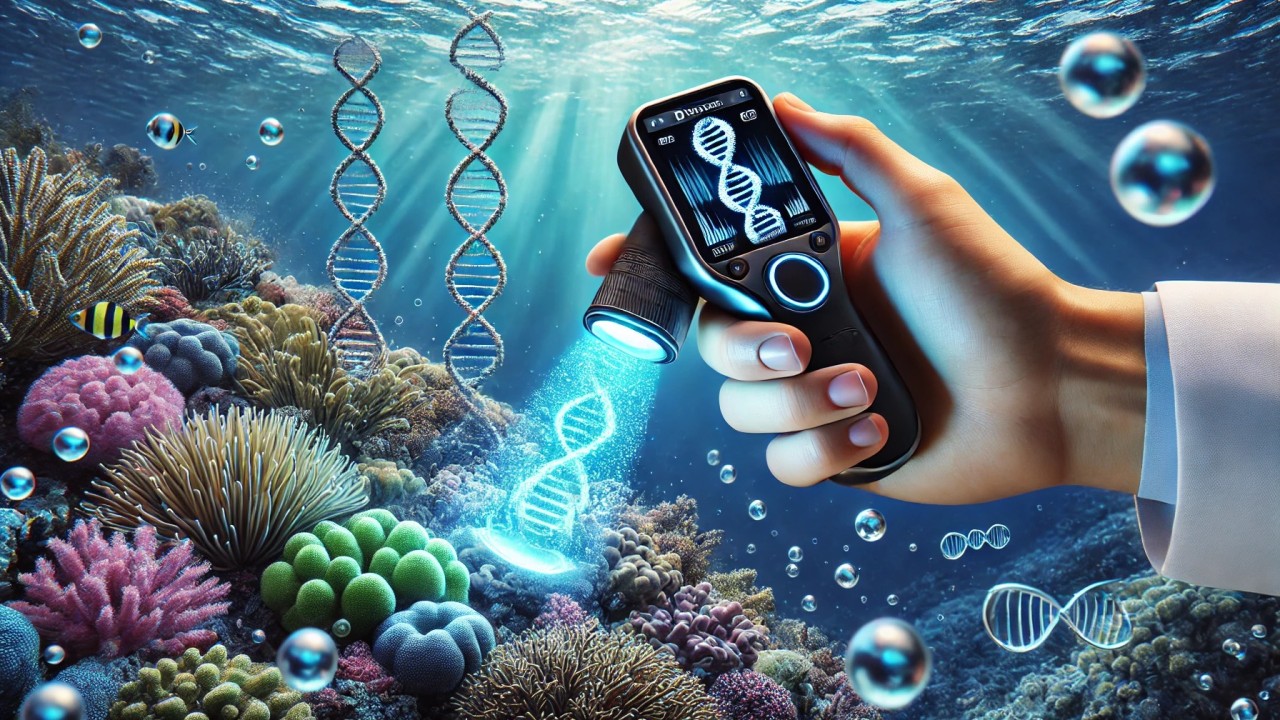
Coral reefs are vibrant ecosystems that underpin marine life, protect coastal communities, and support local economies. Yet, rising sea temperatures and pollution have destabilised these delicate environments, triggering bleaching events and escalating disease outbreaks. Recent research has revealed an innovative method for detecting coral diseases at their earliest stages, combining environmental DNA (eDNA) analysis with portable biosensors.
Preserving Coral Reefs in Challenging Times
Often referred to as “rainforests of the sea,” coral reefs harbour rich biodiversity, promote coastal resilience, and support vital industries such as tourism and fisheries. However, prolonged environmental stress has eroded their defences. One notable threat is the pathogen Vibrio coralliilyticus, which remains benign under normal conditions but becomes virulent at higher temperatures, causing tissue damage and coral bleaching. Traditional monitoring methods, such as visual surveys and manual sampling, can be slow, labour-intensive, and risk overlooking early-stage disease. Scientists and engineers have therefore sought new ways to track pathogens before visible signs of coral decline appear.
A New Paradigm for Early Detection
This emerging solution combines eDNA-based bioindicators with a portable electrochemical biosensor that detects low concentrations of Vibrio coralliilyticus DNA in water. eDNA consists of genetic material shed by organisms through skin cells, mucus, and waste. Since it appears in the surrounding environment before corals exhibit clear signs of stress, eDNA provides an invaluable early warning. The portable biosensor then converts this genetic information into an electrochemical signal, enabling real-time monitoring with minimal effort.
Several key questions guided the research. Could a portable biosensor accurately detect Vibrio coralliilyticus at extremely low levels in seawater long before visible damage was done to corals? Might nanomaterials—specifically cobalt-iron Prussian Blue Analogue (Co-Fe PBA)—enhance the sensor’s performance? Could early detection genuinely enable timely interventions and prevent the cascading damage often observed in reef ecosystems?
Developing the Portable Electrochemical Biosensor
The newly designed biosensor results from an interdisciplinary effort at the intersection of chemistry, biology, and engineering. Its core relies on two elements: eDNA as the biological indicator and Co-Fe PBA nanomaterials embedded within the electrode. This combination ensures that the sensor can detect even minute traces of target DNA.
How the Biosensor Works: Corals—whether healthy or stressed—continuously release eDNA into their surroundings. The biosensor collects a water sample and utilises specialised oligonucleotide probes designed to detect Vibrio coralliilyticus DNA. When the target binds to these probes, it triggers an electrochemical signal that translates into a quantifiable measurement. The Co-Fe PBA nanoframes significantly enhance this process by providing an expansive surface area for probe attachment and facilitating rapid electron transfer. Notably, detection levels range from 100 femtomolar (fM) to 100 nanomolar (nM), exceeding many current monitoring methods.
Material Synthesis and Validation
Researchers synthesised Co-Fe PBA nanoframes in the laboratory, integrating these materials into the sensor’s electrode system to maximise probe density. The custom oligonucleotide probes were then subjected to stringent specificity checks to ensure they would not bind to the DNA of unrelated marine microorganisms. Following this, calibration tests confirmed that the biosensor maintained high sensitivity, a broad detection range, and strong specificity. Reproducibility studies revealed consistent outputs across multiple trials, while validation in controlled aquarium setups, which simulated rising seawater temperatures, assisted in correlating eDNA levels with the onset of coral stress and bleaching.
Key Findings: A Promising Tool for Coral Monitoring
One significant achievement was the clear characterisation of the Co-Fe PBA nanoframes. Microscopic and spectroscopic analyses confirmed a hollow, open cubic architecture with a high specific surface area of approximately 72 m²/g. This robust structure considerably enhanced electron transfer, reducing impedance from 81 Ω (bare electrode) to 68 Ω when the nanoframes were incorporated. In practical terms, the biosensor’s electrical response becomes more sensitive, enabling the detection of target DNA at exceedingly low concentrations.
Further evaluations revealed a linear relationship between the sensor’s current signal and the logarithm of the target DNA concentration, which spanned from 100 fM to 100 nM. The limit of detection was 19.0 fM, demonstrating impressive sensitivity. In specificity tests, the sensor largely disregarded potential interfering species, emphasising its precise focus on Vibrio coralliilyticus. Its stability also proved remarkable; after a week at room temperature, the sensor maintained approximately 88% of its signal—an essential quality for field-based applications where regular maintenance is challenging.
In controlled coral infection experiments simulating elevated seawater temperatures, the sensor detected a consistent rise in eDNA prior to any visible bleaching. When eDNA attained approximately 645 copies/µL at 30 °C, subsequent visual assessments confirmed a decline in coral health. Parallel measurements using droplet digital PCR showed no statistically significant differences from the biosensor results. This alignment with established methods enhances the device’s credibility as a real-time, on-site tool for diagnosing coral disease risk.
Broader Implications for Marine Conservation
Beyond its immediate benefits, the portable electrochemical biosensor illustrates how the integration of eDNA, bioindicators, and advanced nanotechnology can transform environmental monitoring. It highlights the importance of interdisciplinary collaboration—merging material science, molecular biology, and environmental engineering has proven especially fruitful. Most importantly, the ability for early detection can shift conservation strategies from reactive to preventive, potentially saving time, resources, and marine life.
This research also emphasises the necessity for practical solutions that can function effectively outside of controlled laboratory environments. Genuine progress in conservation occurs when innovative science is coupled with operational simplicity and deployable field devices.
Looking to the Future: A Brighter Horizon for Coral Reefs
Several avenues for development exist. The researchers are examining microfluidic systems to streamline DNA extraction, accelerate the process, and enhance user-friendliness. The fundamental principles could be adapted to identify other marine pathogens or environmental indicators, transforming the device into a multi-purpose sentinel for diverse aquatic ecosystems.
Real-time data analytics represents another significant frontier. Pairing the biosensor with advanced analytical platforms could revolutionise how field data is processed, enabling immediate insights into coral health trends and facilitating proactive interventions. Engaging with communities, policymakers, and conservation organisations will be essential for integrating these innovations into existing management frameworks and maximising real-world impact.
For many countries, coastal resources are national treasures worth preserving. A portable electrochemical biosensor offers a compelling glimpse of how technology can bolster conservation. Its remarkable sensitivity, reliability, and ease of use allow environmental managers and local stakeholders to respond faster than ever before. By detecting the earliest signals of coral disease, we move closer to preserving the reefs that sustain biodiversity, livelihoods, and coastal protection.
Leave a Reply