Mauritania is a country located in Northwest Africa, bordered by the Atlantic Ocean to the west, Western Sahara to the north, Algeria to the northeast, Mali to the east and southeast, and Senegal to the southwest. It covers an area of approximately 1,030,700 square kilometres, making it one of the larger countries in Africa, but it is sparsely populated, with a population of around 4.5 million people. Mauritania is a diverse country with a rich cultural heritage, combining Arab, Berber, and African influences.
The Banc d’Arguin National Park: A Marine Haven
The Banc d’Arguin is a national park and UNESCO World Heritage site located along Mauritania’s Atlantic coast. The Banc d’Arguin National Park is a unique environment. It is one of the most important bird sanctuaries in the world, serving as a crucial stopover for migratory birds travelling between Europe and southern Africa. The park’s ecosystem is a unique blend of coastal and desert environments, including sand dunes, coastal swamps, small islands, and shallow coastal waters. The Banc d’Arguin is also home to various species of fish and marine mammals, making it an essential area for both biodiversity and conservation. The Imraguen people, who traditionally rely on sustainable fishing practices, also inhabit the park, and their way of life is deeply intertwined with the natural environment.
Why Sharks and Rays Matter
Sharks and rays, collectively known as elasmobranchs, are vital to marine ecosystems. They keep prey populations in check and help maintain the health of coral reefs and seagrass beds. However, these animals are facing a crisis. They grow slowly, mature late, and produce few offspring, making them extremely vulnerable to overfishing. Despite protective measures at the Banc d’Arguin, the park’s shark and ray populations are under increasing pressure.
A groundbreaking study has revealed a surprising diversity of sharks and rays. Using cutting-edge DNA techniques, researchers explored the Banc d’Arguin National Park, West Africa’s largest marine protected area. Their findings reveal rich biodiversity but also raise alarm bells about the future of these ancient creatures.
Decoding DNA to Count Sharks and Rays
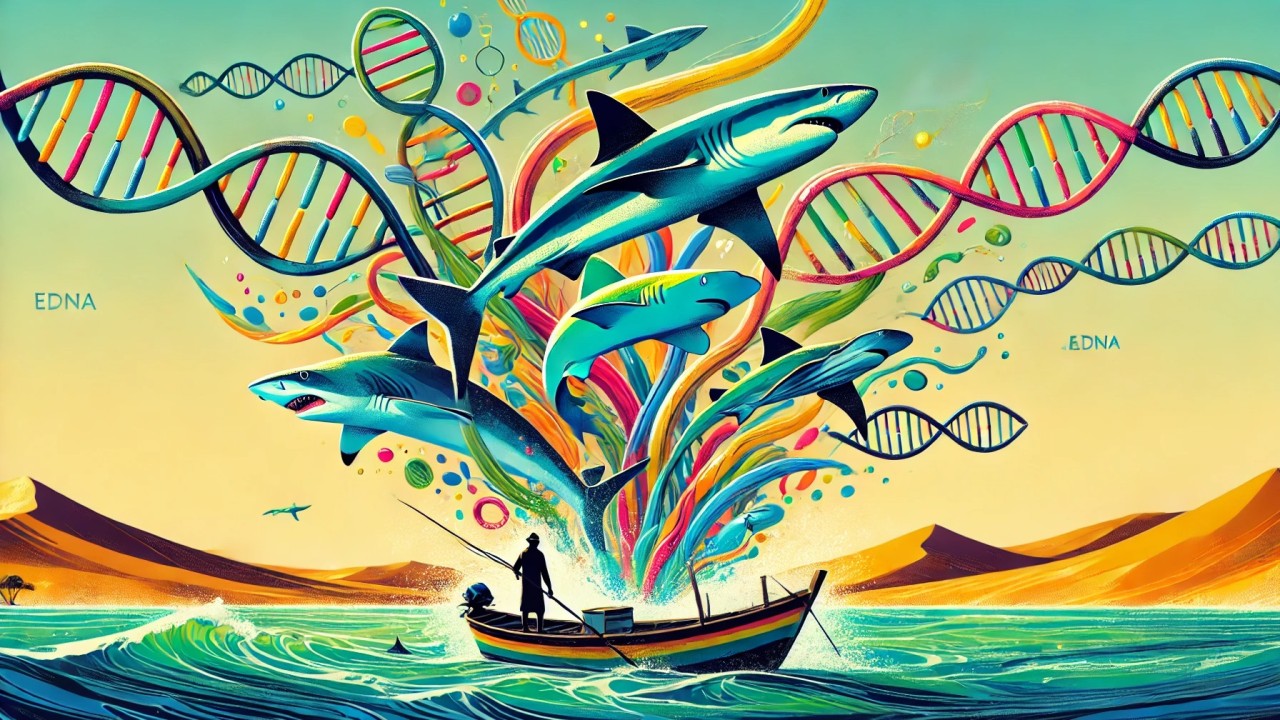
The research team set out to create a comprehensive inventory of elasmobranch species in the Banc d’Arguin. To achieve this, the research team used two main approaches. First, they collected tissue samples from sharks and rays at local processing sites. They then analysed the DNA from these samples to create a genetic reference database. Second, they collected seawater samples from various locations in the park. By analysing the trace amounts of DNA in the water – known as environmental DNA or eDNA – they could detect which species were present without ever seeing them. The use of eDNA in this study proved to be a game-changer. It is a non-invasive, cost-effective way to survey biodiversity, especially useful in remote areas like the Banc d’Arguin, where traditional survey methods are challenging.
The Discoveries: New Species and Taxonomic Twists
The study not only documented new species but also revealed potential taxonomic errors and undiscovered species. The researchers reported 27 species of sharks and rays, with 12 species recorded in the Banc d’Arguin for the first time, indicating a previously undocumented diversity. New findings included previously unreported species such as the lesser spotted dogfish (Scyliorhinus canicula), smalltooth stingray (Hypanus rudis), and pelagic stingray (Pteroplatytrygon violacea).
Some species thought to be common were absent, while others believed to be rare were found in abundance. For example, the common smoothhound shark (Mustelus mustelus), frequently reported in the area, was not detected. Instead, its lookalike cousin, the blackspotted smoothhound (Mustelus punctulatus), was found throughout the park.
The study also uncovered potential new species. A type of butterfly ray and an electric ray were found that do not match any known species descriptions. These could be new to science, highlighting how much we still have to learn about marine life in this region.
A Grim Reality Check: Threats on All Sides
While the diversity discovered is exciting, the findings also reveal a troubling truth. According to the International Union for Conservation of Nature (IUCN) Red List, a staggering 67.9% of the shark and ray species found in the Banc d’Arguin are threatened with extinction. This makes the park a critical area for elasmobranch conservation.
Several factors are driving the decline of sharks and rays in the region. Overfishing is the primary culprit. Despite regulations, these animals are still frequently caught for their fins and meat, often illegally or as accidental bycatch. Habitat degradation from coastal development and pollution also plays a role. While there are laws in place to protect these species, enforcement is often weak.
Charting a Course for Conservation: Hope in Troubled Waters
Protecting sharks and rays in the Banc d’Arguin will require a multi-faceted approach. More vigorous enforcement of existing fishing regulations is crucial. Implementing more sustainable fishing practices and reducing bycatch through better gear technology could make a significant difference. Engaging local communities in conservation efforts and providing alternative livelihoods to reduce dependence on fishing is also vital. Continued research and monitoring using eDNA and other methods will be essential to track species diversity and population trends.
This study is an essential first step in the race to protect these ancient mariners. It sheds light on the hidden diversity of sharks and rays in the Banc d’Arguin National Park. It underscores the crucial role of advanced molecular techniques in uncovering and protecting biodiversity. As we uncover their secrets, we are also uncovering our responsibility to ensure their survival.
The future of West Africa’s sharks and rays hangs in the balance, and the time to act is now. While the challenges are significant, there is still hope. With improved management, enforcement, and ongoing research, we can work to preserve the incredible shark and ray populations in this vital marine protected area and world treasure.
Leave a Reply