
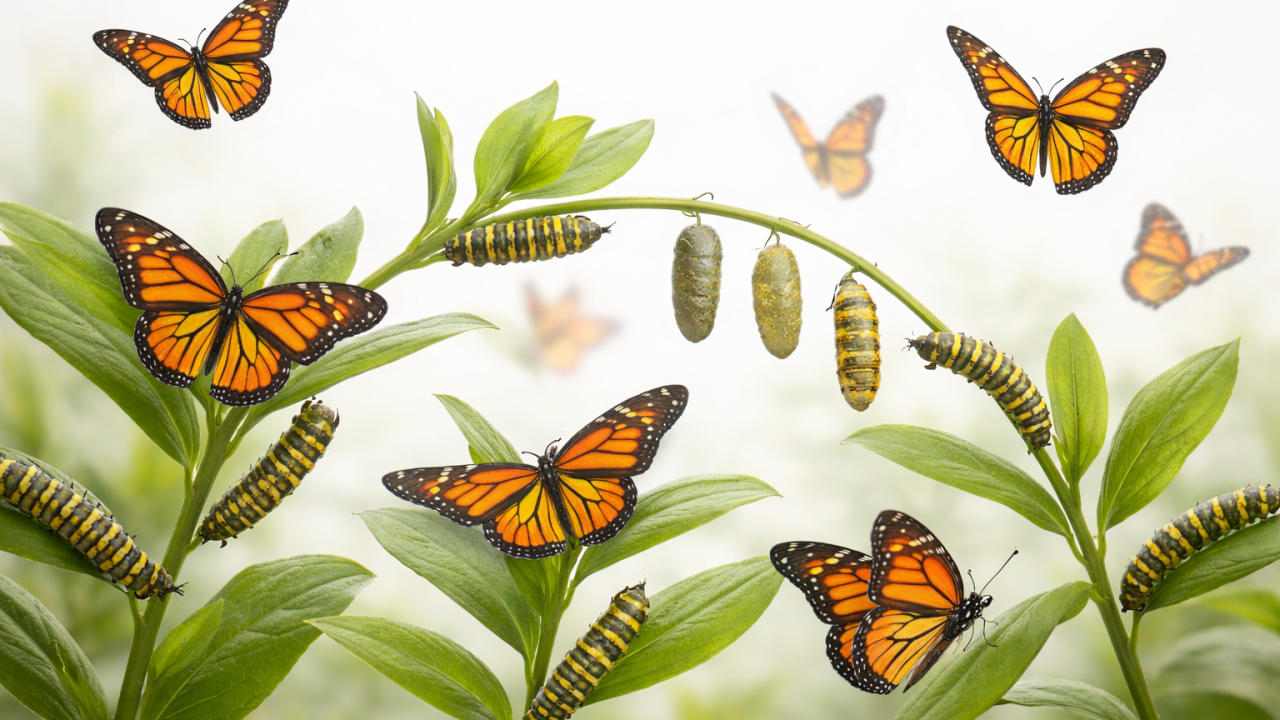
The first time most of us encounter a butterfly, we meet it with wonder. A flash of colour, a moment of stillness. As children, butterflies arrive as beauty. We all remember the first time holding one- the powdery shimmer it leaves on your fingers. A butterfly feels light, fleeting, almost unnecessary, and yet somehow essential.
For scientists, however, the relationship is more complicated. In my own work, butterflies and moths have often entered the story not as symbols but as data points, and sometimes even as problems. In one project in Ghana, we studied the species Leucinodes, a pest of eggplant better known as the Eggplant fruit and shoot borer. The damage was not caused by the adult moth, which is small, almost elegant, and easy to overlook. The destruction came earlier, in the caterpillar stage, hidden deep within the fruit, consuming relentlessly. The irony is striking. The stage that does the damage looks ordinary, even unpleasant. The stage we admire is delicate, winged, and seemingly harmless.
In another project, we are studying the diversity of butterflies following forest restoration in Kenya. Here, butterflies have returned in a different role altogether. They are no longer pests or curiosities but indicators, signals that something in the ecosystem is healing. As the population and diversity of butterflies increase, we know the forest is beginning to breathe again. Same organism. Different meaning. Different role.
And this is where the butterfly becomes more than biology. Scientifically, we know that a caterpillar does not “improve” into a butterfly. It dissolves. Inside the cocoon, much of the old structure breaks down completely. What emerges is not a polished version of the past but something fundamentally new. The caterpillar cannot come with the butterfly.
This is the part we often skip when we speak of transformation. We favour the language of growth. We are less comfortable with the language of loss. But metamorphosis demands surrender. Old habits, identities, and ways of being cannot simply be carried forward. They must be let go, sometimes painfully, sometimes quietly, often invisibly.
In work, careers, organisations, and life, we often cling to caterpillar logic while seeking butterfly outcomes. We want change without dissolution, transformation without discomfort, and beauty without the dark pause of the cocoon. Nature does not work that way.
The butterfly teaches us that becoming requires un-becoming. That some phases of our lives are meant to end completely. That which once consumed and survived must give way to something that serves, pollinates, and moves lightly through the world.
And perhaps that is the deeper lesson: the systems we admire most, forests, fields, and communities, are sustained not by permanent forms but by timely transitions. The caterpillar is necessary. The butterfly is necessary. But they cannot coexist. And so the question the butterfly leaves us with is not whether we want transformation, but whether we are willing to let the old shape dissolve so the new one can emerge.
The butterfly is one of the insects I write about in my recent book ‘The Kingdom of Small Things’ To learn more about the simple yet powerful lesson of the butterfly, pick up a copy, now available on Amazon and on Kindle.
Leave a Reply